
Last updated November 25, 2026
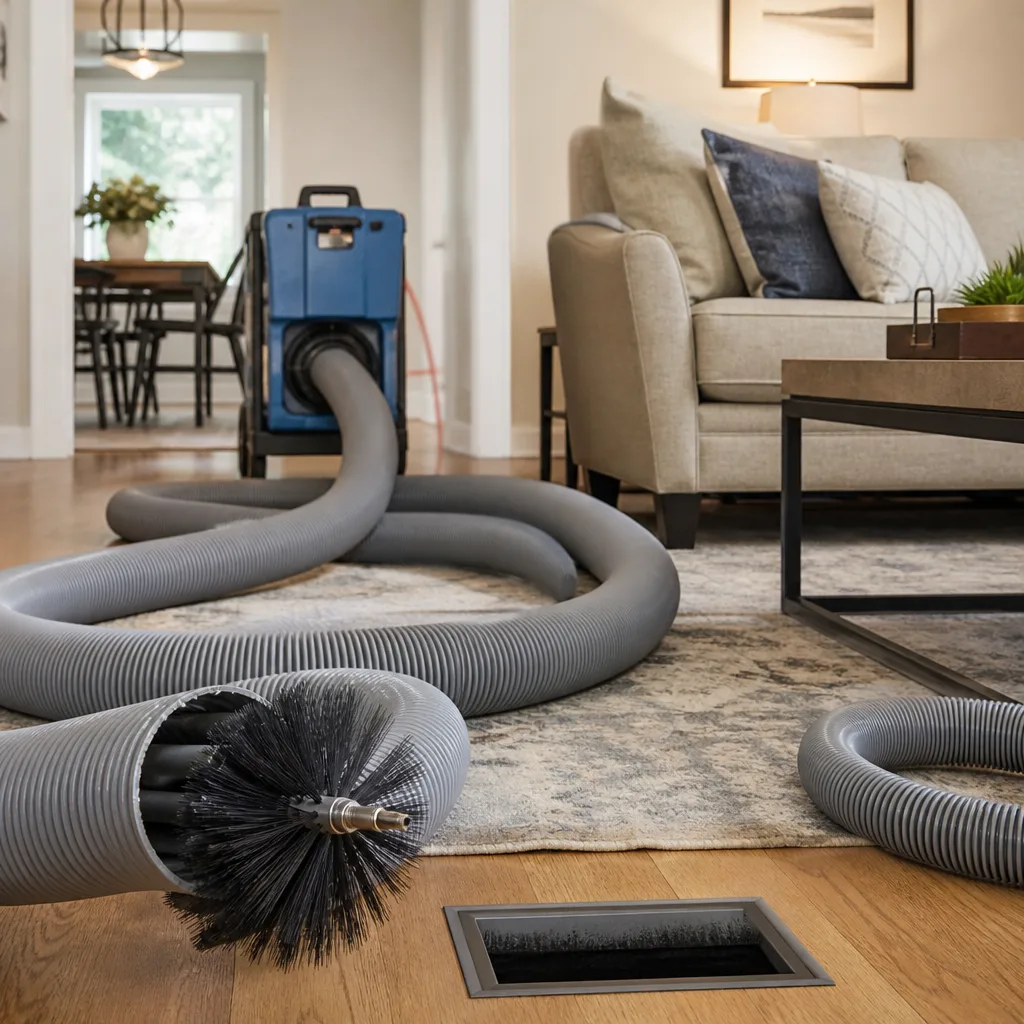 Whole-home duct cleaning
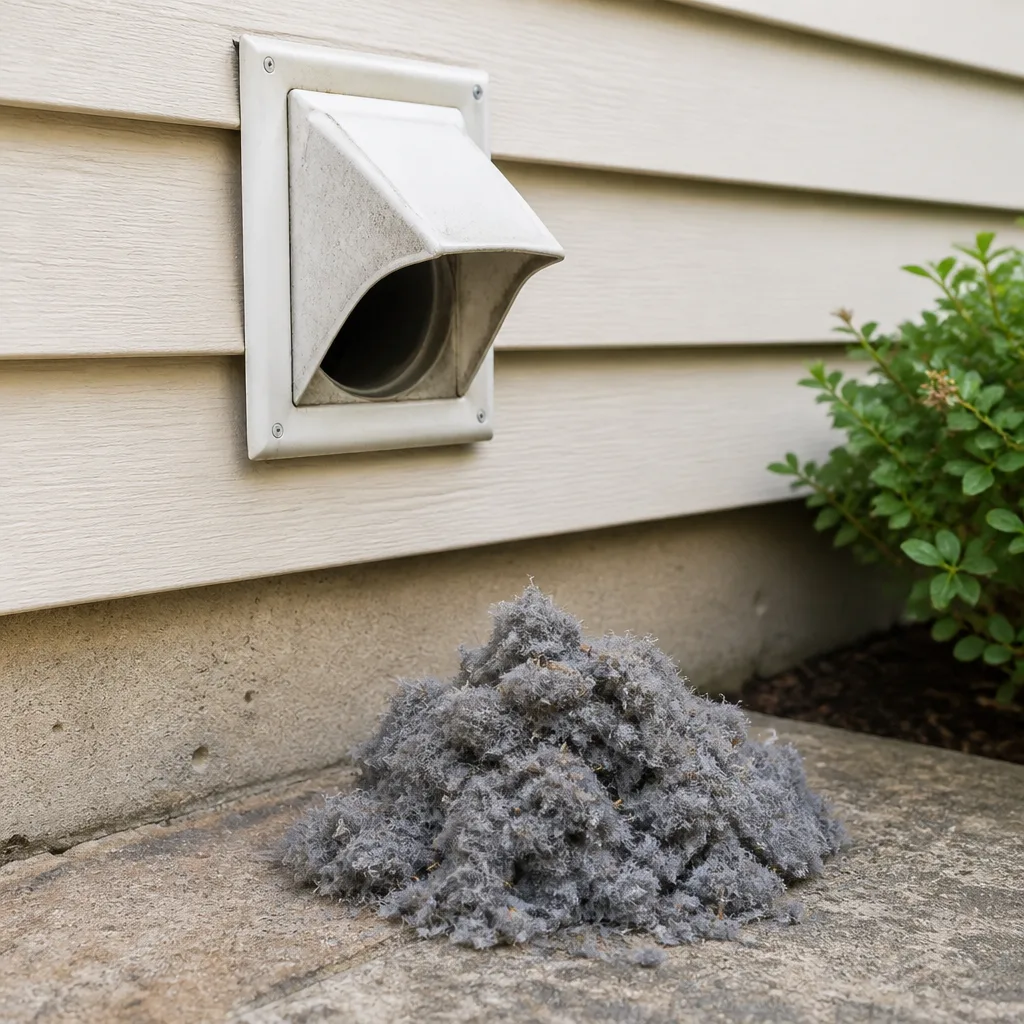 Dryer vent cleaning
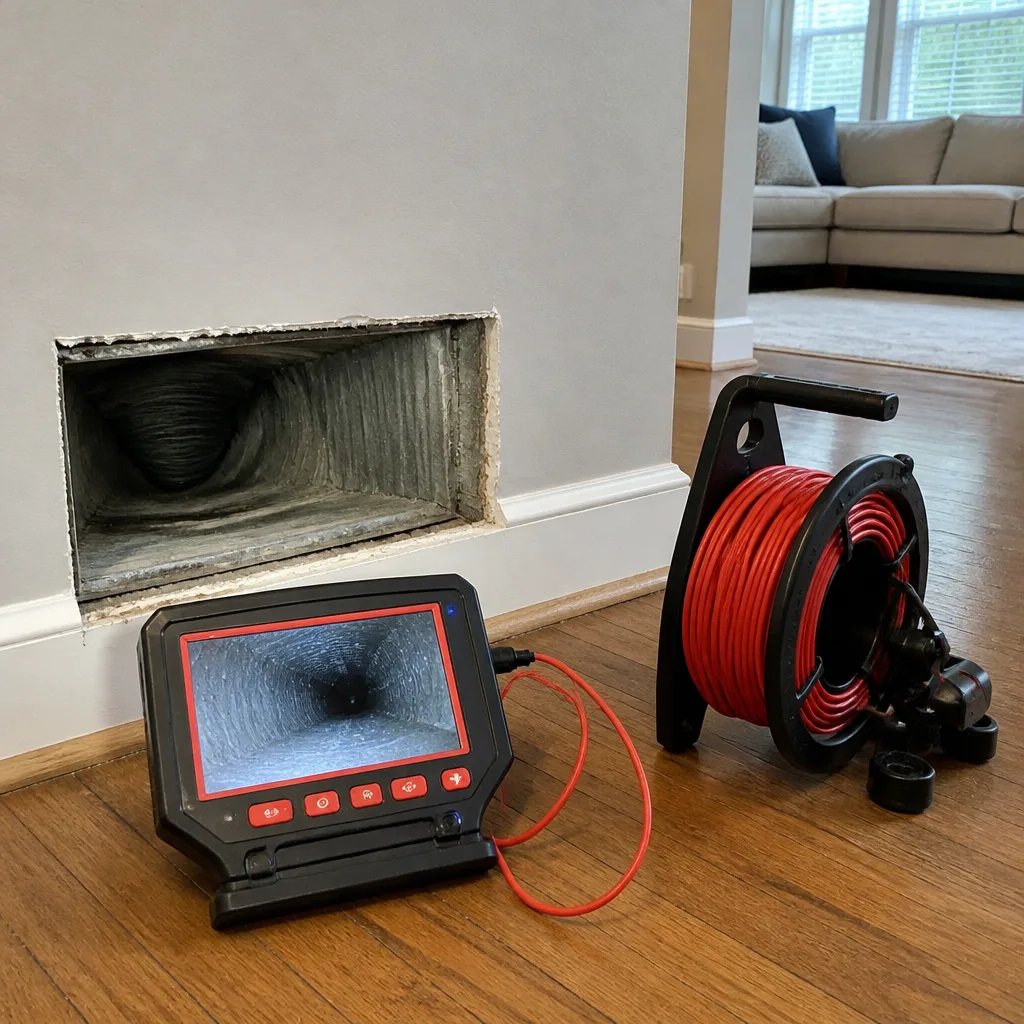 Camera inspection
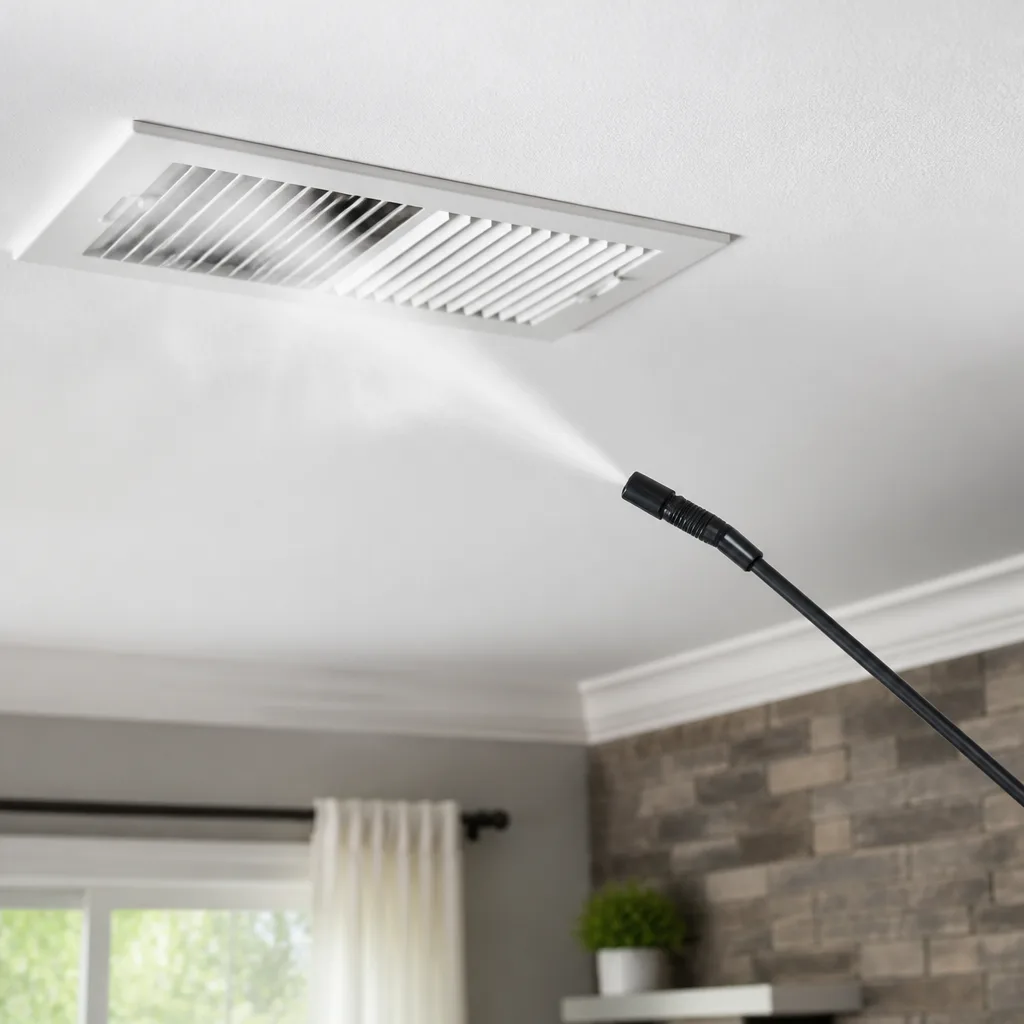 Sanitizing & deodorizing
Whole-system duct and dryer vent check with before-and-after photos - you see exactly what came out of your vents
That "$99 whole-house special" is a bait ad - the real number appears once they are in your hallway, or the "clean" is a shop-vac at the register. We photograph the inside of your ducts before and after instead.
Air Duct Cleaning Permits, Codes & Inspections in Charleston, NY: What You Need to Know
Here’s the part most homeowners get backwards: the duct cleaning itself is almost never the legal problem. The repair, the sealing, the rerouting, the new run added to reach a finished room – that’s where permits live in New York. A duct repair made without a permit in New York doesn’t just risk a fine. It can put your homeowner’s insurance coverage at risk for any fire or air quality incident later traced to that work, and it can surface at the worst possible moment: a home inspection during a sale. This guide draws that line clearly for Charleston, NY homeowners, property managers, and anyone buying or selling a house in Columbia County. You’ll learn what needs a permit, how the Town of Canaan handles HVAC permits, what inspectors actually look for, and how to protect yourself with a written scope of work.
Quick Answer
In New York, routine air duct cleaning by itself typically does not require a building permit, because cleaning is maintenance and maintenance is not construction. Permit requirements attach when the work becomes a modification: cutting new duct openings, rerouting runs, replacing or extending ductwork, or making changes that alter the mechanical system. Homeowners in Charleston, NY should confirm with the Town of Canaan code office before any repair work starts, because the answer depends on what’s actually changing inside the walls.
Styles & brands we work with
- Whole-home duct cleaning
- Dryer vent cleaning
- Camera inspection
- Sanitizing & deodorizing
Table of Contents
- Where the Line Falls: Cleaning vs. Modification in New York
- The NY State Mechanical Code Sections That Matter Most
- How Columbia County and the Town of Canaan Handle HVAC Permits
- What an Inspection of Duct Work Actually Looks Like
- What Unpermitted Duct Work Does to Your Insurance and Your Home Sale
- The Scope-of-Work Letter That Protects You
- Why Duct Sealing and Insulation Replacement Draw Extra Scrutiny
- Local Context: Why Duct Problems Show Up Differently Here
Where the Line Falls: Cleaning vs. Modification in New York
The clearest way to think about it: cleaning removes what’s inside the duct. Modification changes the duct itself. New York regulates the second and generally leaves the first alone. That distinction matters because contractors sometimes blur it, and homeowners rarely ask which side of the line their job sits on until something goes wrong.
Here’s how the split typically plays out for residential work in Charleston, NY:
- Cleaning (no permit typically required): Mechanical agitation and vacuuming of existing duct interiors, register and grille cleaning, blower and coil cleaning as part of routine HVAC maintenance.
- Sanitizing (no permit typically required): Application of an antimicrobial treatment to existing duct surfaces, provided no material is removed or added to the system.
- Repair or modification (permit may be required): Cutting new openings in ductwork, adding a branch run to a room that didn’t have one, rerouting a trunk line, replacing rigid duct sections with a different material, extending a run, or altering the system’s configuration.
- Sealing (depends on method and scope): Sealing existing joints with mastic or approved tape is usually treated as maintenance. Sealing that involves cutting into ductwork to access inaccessible sections, or that changes the system’s air balance significantly, can cross into permitted territory.
In our experience, the jobs that surprise homeowners are the quiet ones: a contractor opens a wall to patch a crushed flex run and doesn’t mention that opening the chase and reconnecting the duct is a mechanical alteration. That’s the moment to slow down and call the code office. The one phone call costs nothing. The unpermitted work can cost a great deal.
The NY State Mechanical Code Sections That Matter Most
New York State’s Mechanical Code, which adopts the International Mechanical Code with state amendments, is the governing document for residential ductwork. You don’t need to memorize it, but understanding which sections inspectors lean on helps you ask better questions of any contractor you hire in Charleston, NY.
The sections that come up most often for residential duct work:
- Duct construction and materials: Establishes what duct materials are permitted and how they must be installed. This is where you’ll find rules about minimum duct thickness, joints, and support spacing. It’s also the section inspectors reference when they find ductwork that isn’t properly supported or connected.
- Duct sealing: Requires that duct systems be sealed to prevent air leakage. This is the section that makes duct sealing both a good idea and, when done as part of a permitted mechanical project, a requirement.
- Duct insulation: Sets requirements for insulating ductwork, particularly where ducts run through unconditioned space like attics or crawlspaces. Charleston’s older housing stock includes plenty of both.
- Return air and plenum rules: Governs how return air is drawn and how plenums are constructed. This section catches poorly executed duct repairs where a return was added or moved without proper design.
- Access and clearance: Requires that ductwork and mechanical equipment be accessible for inspection and service. New runs that get hidden behind drywall without access panels draw scrutiny.
One useful practical note for Charleston homeowners: the code is the floor, not the ceiling. A contractor can install ductwork that passes inspection and still does a mediocre job. Which is why the inspection step and the scope-of-work letter (covered below) matter as much as the code itself. If you want to understand why we approach cleaning and repair as two distinct phases of one job, our air duct cleaning page walks through the cleaning side; the code side is what this guide is about.
How Columbia County and the Town of Canaan Handle HVAC Permits
Charleston, NY sits within the Town of Canaan in Columbia County, and that’s the code authority that matters for most residential duct work here. The Town of Canaan’s code enforcement office issues building permits and coordinates inspections for work within its jurisdiction. New York State’s Uniform Fire Prevention and Building Code is the underlying standard, and local offices apply it.
Practically, here’s what the permit process looks like for a duct-modification project in Charleston:
- Contact the Town of Canaan code enforcement office before work starts. Ask directly whether the specific scope you’re planning requires a permit. Describe the work in physical terms: “We’re cutting a new supply register into a finished bedroom and running a branch duct to it.” Vague descriptions get vague answers.
- Submit a permit application with a scope of work and often a simple plan or sketch. For a small duct alteration, a hand-drawn plan showing the new run and how it connects to the existing system is usually enough. Larger projects may require a contractor’s drawings.
- Pay the permit fee. Fees vary by jurisdiction and by project valuation. Ask for the schedule when you call.
- Complete the work with inspection milestones. Some duct projects require a rough-in inspection before drywall closes, and a final inspection once the system is completed and operational.
- Pass the final inspection and keep the documentation. That inspection record is what protects you at resale.
For property managers working in Charleston or nearby Columbia County towns, it’s worth building a direct line to the code office into your routine. The rules don’t change often, but the application does, and a two-minute conversation saves a week of headaches. Columbia County’s other towns each run their own code offices, so a job in Copake or Chatham answers to a different office than a job in Charleston.
What an Inspection of Duct Work Actually Looks Like
A duct inspection isn’t a cleaning. It’s a check of installation and code compliance: how the duct is built, supported, connected, sealed, and sized. Inspectors look at connections, materials, support spacing, and whether the system matches what was permitted. For a residential project in Charleston, expect the inspector to walk through these items:
- Duct support and sagging. Flex duct that sags between hangers restricts airflow and draws a correction notice. Rigid duct should be supported at intervals the code specifies, and inspectors check it visually.
- Connections and joints. Every joint should be mechanically fastened and sealed. Inspectors look for taped joints that have already started peeling, or joints where the tape isn’t the approved kind.
- Insulation in unconditioned spaces. Duct runs through an attic or crawlspace should be insulated to code. Charleston’s mix of older homes and additions means some of these runs have been uninsulated for years.
- Proper return air path. If a return was added or moved, the inspector checks that it’s designed correctly and doesn’t pull air from a hazardous location.
- Access panels. New ductwork should be accessible for future service. Ductwork sealed behind drywall without an access point gets flagged.
- Documentation. The inspector checks the work against the permit scope. Work outside the scope gets a correction notice and requires a revised permit.
One thing we tell homeowners in Charleston: the inspection happens at the end, but the prep happens at the start. If the permit scope describes one thing and the contractor does another, the inspection surfaces it, and the cost of fixing it falls on the homeowner in most cases. That’s why the early conversation about scope matters more than the final inspection.
What Unpermitted Duct Work Does to Your Insurance and Your Home Sale
Most homeowners don’t think of their ductwork as an insurance issue. It is. Homeowner’s policies typically cover damage from fire or other covered events, but they also typically exclude or limit coverage for losses arising from unpermitted or non-code-compliant construction. If a fire, smoke event, or air quality issue traces back to a duct repair that didn’t go through the permit process, the insurer may investigate and could deny the claim.
Where this shows up in Charleston and across Columbia County:
- A home sale inspection. Buyers’ inspectors look at mechanical systems. Unpermitted ductwork, new runs without access panels, or alterations that don’t match the disclosed history raise red flags. Sellers are typically required to disclose known unpermitted work, and buyers can walk or renegotiate.
- A resale disclosure form. New York requires sellers to disclose known material defects and known permit issues. Unpermitted duct work is a disclosure item, and failing to disclose it can expose the seller to liability later.
- An insurance claim investigation. If a claim arises after a duct-related fire or air quality incident, the insurer may ask for permit records. If the work was permitted and inspected, the claim moves through routine processing. If not, the claim can be contested.
- A refinance or appraisal. Rarely a problem for small duct work, but noticeable alterations that don’t have records can complicate an appraisal or a lender’s review.
Our recommendation to Charleston homeowners buying or selling: before you close, ask your contractor for a written scope of work for every duct repair on record. A one-page document that lists what was done, when, and whether a permit applied protects the transaction on both sides. We can’t tell you what your specific insurance policy covers; only your agent can. But we can tell you what we’ve seen, and unpermitted duct work is one of the quieter snags in a home sale.
The Scope-of-Work Letter That Protects You
The most useful single document in a duct project is a written scope of work. It shouldn’t be complicated. It should say what’s being done, where, how, and whether a permit is required. This is the document that protects you if a contractor makes an error, if an insurer asks questions, or if a buyer’s inspector finds something later. Request it before the crew arrives, not after.
Here’s what to ask for, and how to frame it in your request to any contractor working in Charleston, NY:
- Describe the existing condition. What did the contractor see during their assessment? “Flex duct run from second-floor bedroom register is disconnected at the trunk. About 12 feet of duct in an unconditioned attic space.” A vague description invites disagreement later.
- Describe the planned work in physical terms. “Reconnect and re-support the run, replace the flex section, seal all joints and connections, and add an access panel at the plenum.” Physical descriptions are what inspectors verify.
- State the permit determination explicitly. One line: “This scope does not require a permit because no new duct openings are being cut and the existing run is being repaired in place.” Or, if a permit applies: “A Town of Canaan mechanical permit will be obtained before work starts.” This statement is what you’ll want if a question comes up later.
- List the materials. Duct material, insulation type, sealant, and any antimicrobial treatment. This is more relevant than homeowners realize, because material substitution is one of the easiest things for a contractor to do quietly.
- State what’s not included. If the contractor isn’t touching a section of duct, say so. It clarifies the boundary of responsibility if a problem emerges later in a nearby section.
We put a scope-of-work letter in customers’ hands as part of every job. It’s not a legal document in the sense a lawyer means, but it’s the document that answers the question everyone asks after the fact: was this work supposed to happen this way? If you’re having duct repair work done and the contractor won’t put the scope in writing, treat that as a signal. The full picture of what we cover is on our Charleston Air Duct Cleaning Pros page; the codes side of the same work is what this guide is about.
Why Duct Sealing and Insulation Replacement Draw Extra Scrutiny
Duct sealing and insulation replacement sit in the awkward middle of the permit question. Done as maintenance, they’re fine. Done as part of a system modification, they fall under permit and inspection. The distinction is usually about method and scope, not about whether the sealant itself is a regulated material.
New York’s mechanical code requires duct systems to be sealed, and the seal itself is inspected as part of permitted mechanical work. That’s a reason (beyond the obvious ones) to seal ductwork properly in the first place. Loose joints waste energy, pull in attic or crawlspace air, and draw the wrong kind of attention if a later inspection uncovers them.
Where Charleston homes run into trouble:
- An old system with leaks that get sealed all at once. A large-scale sealing project on an aging system can change the system’s air balance noticeably. That’s worth discussing with the contractor and, in some cases, with the code office.
- Insulation replacement in an attic or crawlspace. Replacing duct insulation on an existing run is usually maintenance. Installing new insulation on a newly routed run is part of the permitted work.
- Sealing with mastic versus aerosol. Mastic and approved tape applied to accessible joints is routine. Aerosol-based sealing from inside the duct system is a different class of work and often crosses into mechanical modification territory depending on scope.
If you want the technical side of duct sealing and repair laid out in more detail, that’s what our HVAC cleaning page is for. This guide stays focused on the code and permit side of the same projects.
Local Context: Why Duct Problems Show Up Differently Here
Charleston, NY sits in the hills of Columbia County, and the local housing stock reflects it. Plenty of homes here were built before residential central air was standard, which means ducts were added later, sometimes by contractors who weren’t meticulous, sometimes by the homeowner on a weekend. We see that history in the work: runs that sag or are undersized, attic runs with patchy or missing insulation, return air paths that don’t match the original design.
Two local conditions make duct condition worth paying attention to in Charleston:
- Cold winters and warm, humid summers. Ductwork running through unconditioned attic and crawlspace space is exposed to real temperature swings. Insulation that was adequate when installed can degrade, and leaks at joints become more costly when the air inside the duct is being heated or cooled to a very different temperature than the air around it. A run that’s losing conditioned air into a cold attic in January wastes energy and can cause condensation problems.
- Older housing with additions. Additions are where duct modifications most often happen, and where permit questions most often go unasked. A new room gets a new register; the run has to be cut in somewhere; the permit question is easy to skip. If you’re buying a Charleston home with a recent addition, ask for the mechanical permit history alongside the rest of the disclosure package.
Dryer vent work is a separate legal question from duct work, and it’s one worth knowing about. Dryer vents are a fire-safety concern and a frequent cause of residential fires. Building codes and appliance manufacturer instructions set limits on vent length, material, and routing, and those rules come up in Charleston inspections more often than anyone would guess. Our dryer vent cleaning page covers the practical side; the code side of dryer venting is worth a conversation with your local code office if you’re planning any change to the route.
Common Mistakes to Avoid
- Assuming cleaning always equals no permit. Cleaning alone typically doesn’t need one, but “we’re just cleaning” sometimes hides a repair. Read the scope and ask what’s actually being modified. Two sentences of clarity here save a lot of trouble later.
- Letting the contractor decide about the permit. The permit is the homeowner’s responsibility in the eyes of most code offices, even when the contractor pulls it. Ask explicitly: “Is a permit required for this scope, and who is pulling it?” Get the answer in writing.
- Skipping the rough-in inspection. If a project requires a rough-in inspection before drywall closes, skipping it means the walls come down later to satisfy the inspector. That’s an expensive way to save an hour.
- Sealing every joint “while you’re in there” without checking system balance. A large sealing project on a poorly balanced system can make things worse. Ask the contractor to note in the scope whether the system will be rebalanced after sealing.
- Not keeping the permit records. Once the final inspection passes, file the inspection record with your closing documents. Insurance claims and resales are both easier when that piece of paper is somewhere findable.
- Trusting a verbal scope. Verbal descriptions of what was going to be done rarely match what actually gets done, and there’s no way to arbitrate later without a written record. Insist on a written scope before work starts.
- Forgetting about the dryer vent. Charleston homeowners routinely ask about duct codes and skip the dryer vent, which has its own code limits on length, material, and routing. A dryer vent that violates them is a fire risk and an inspection problem.
See the difference
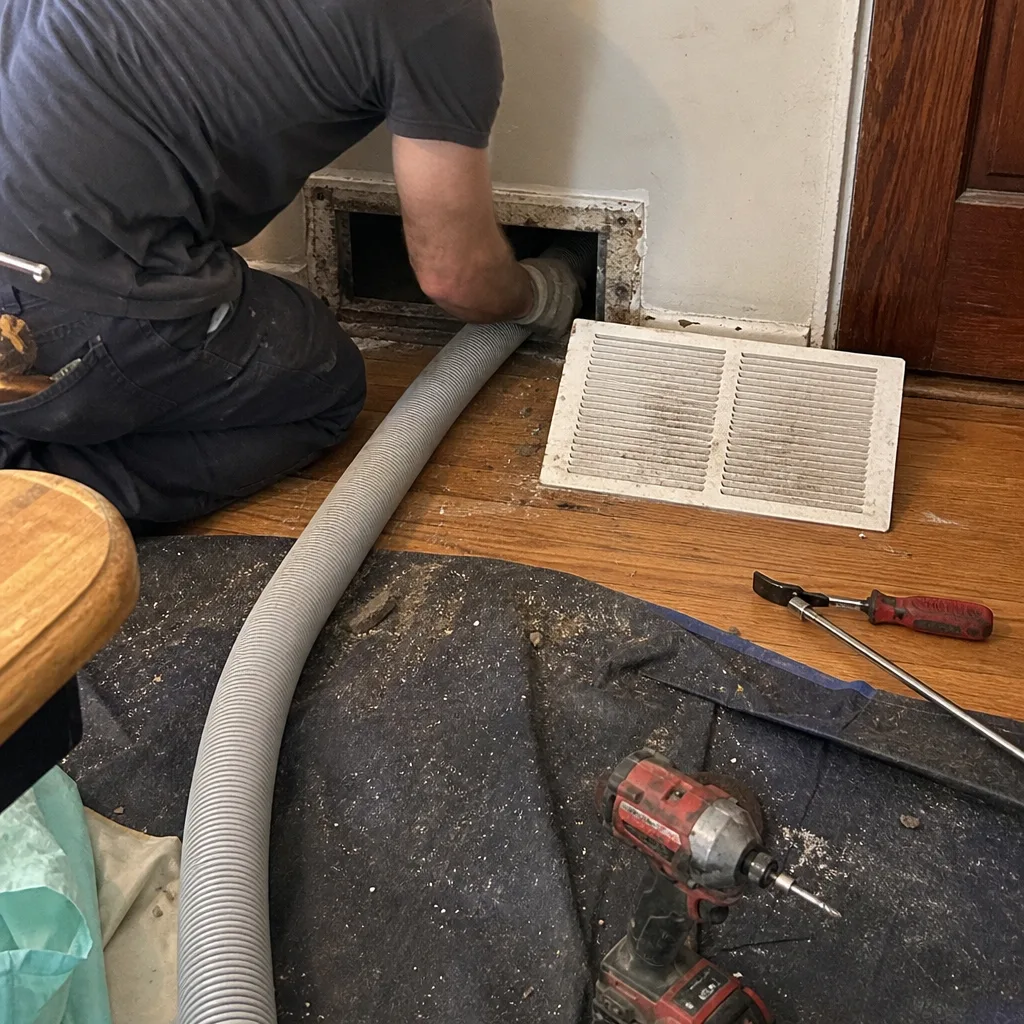 Before
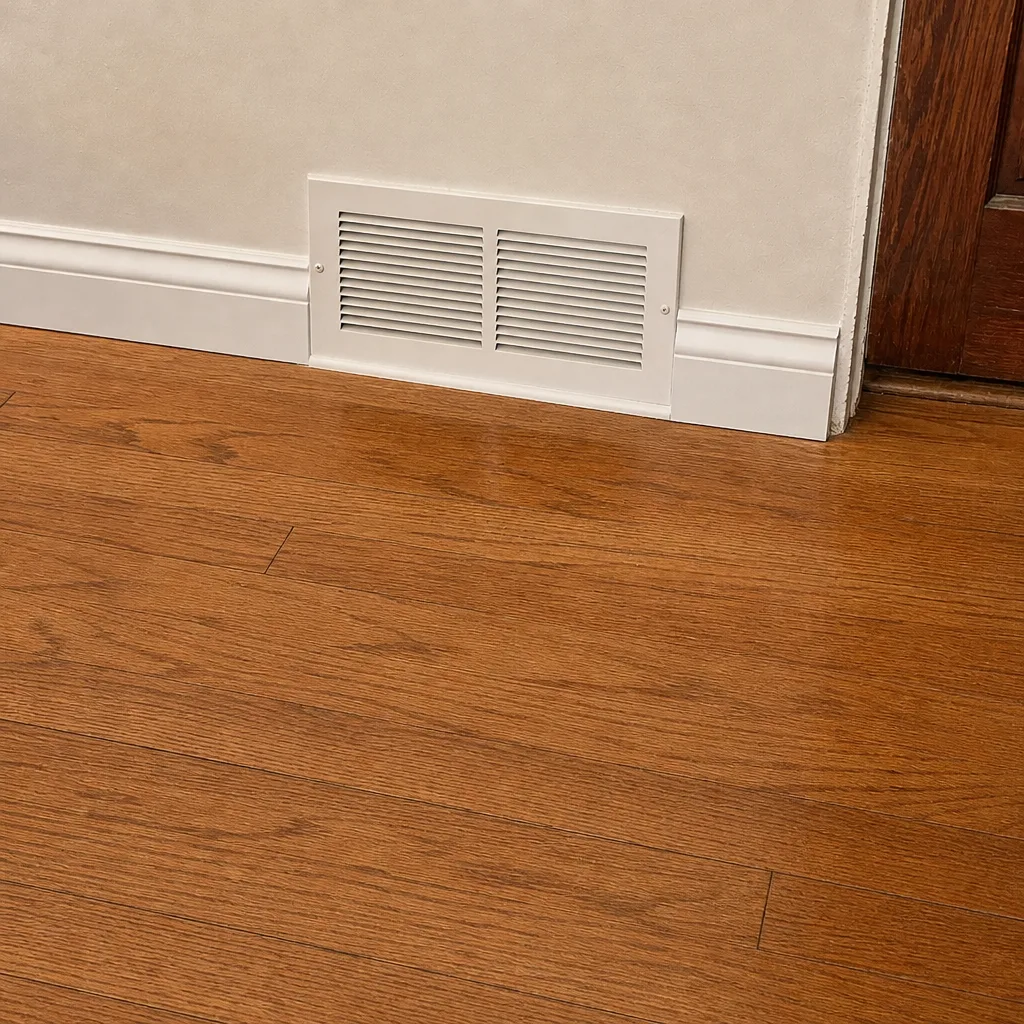 After
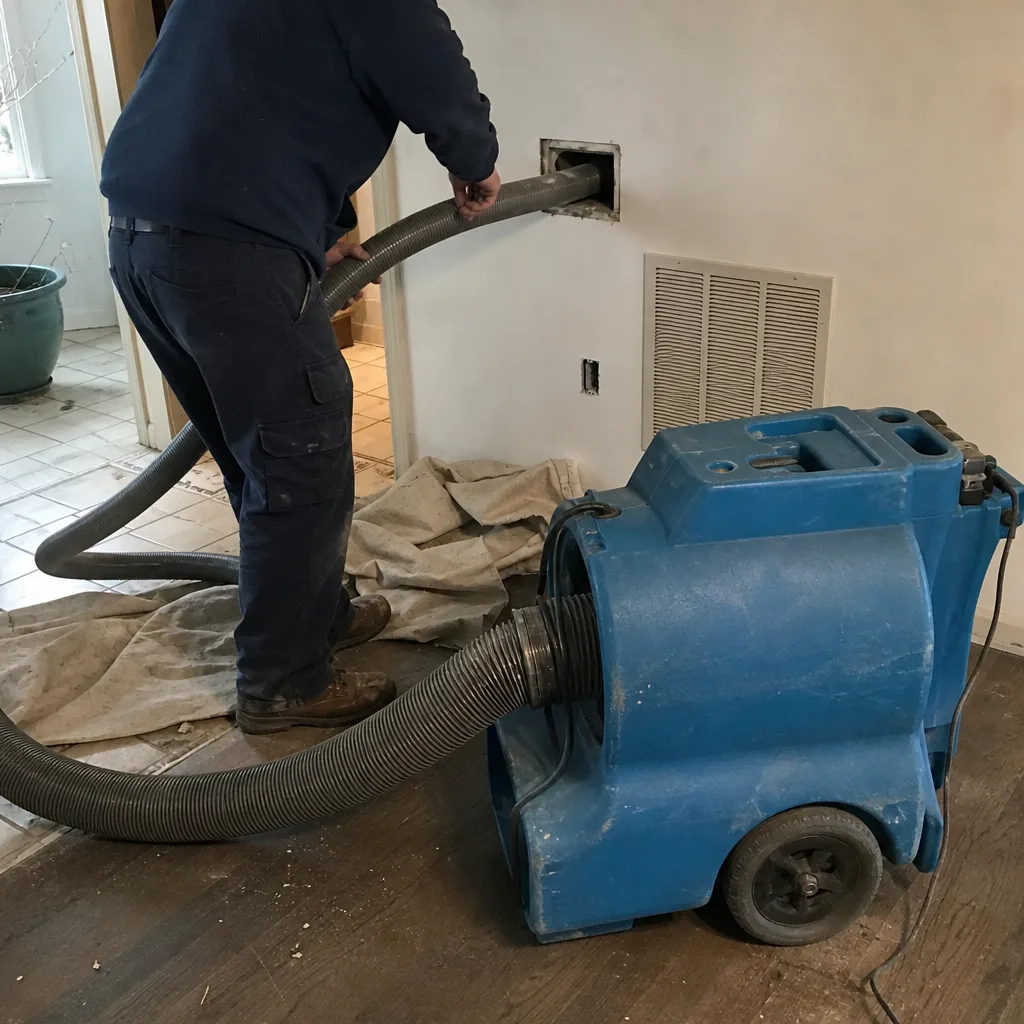 Before
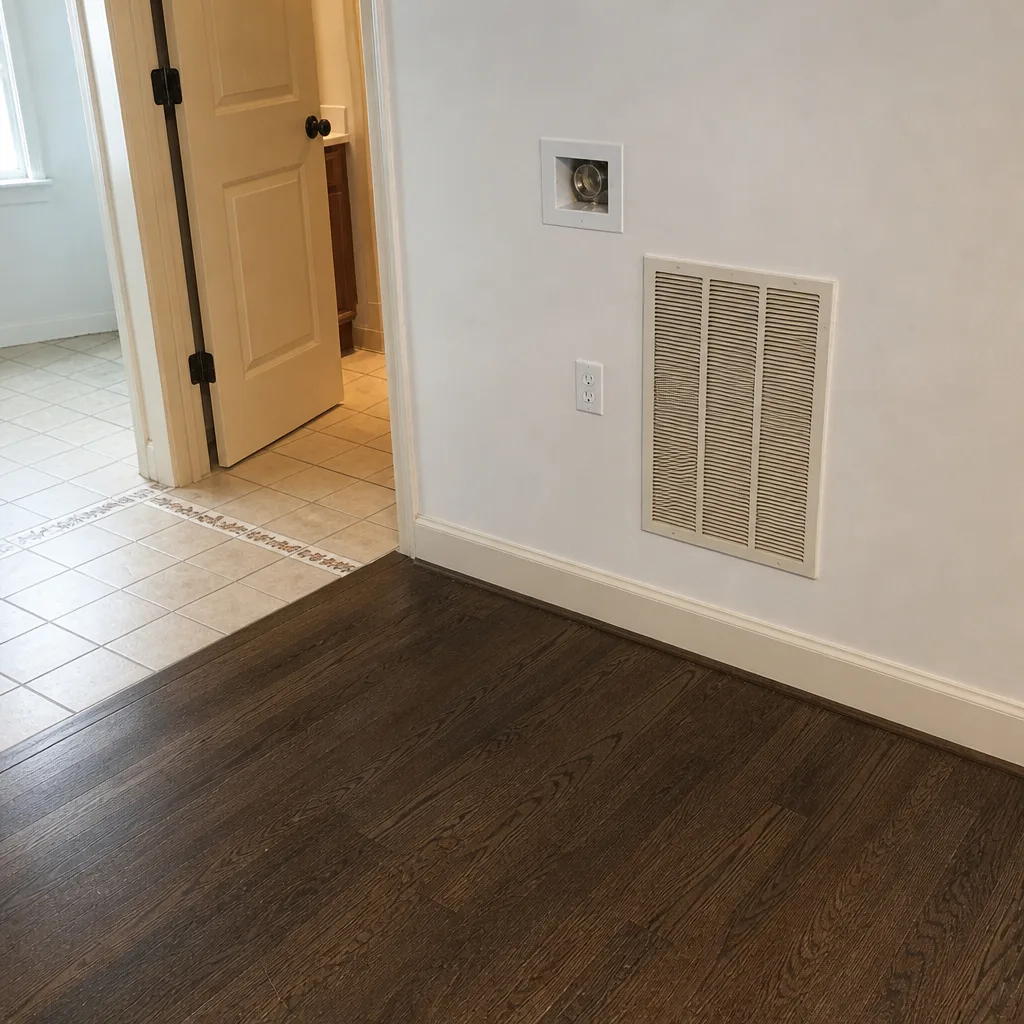 After
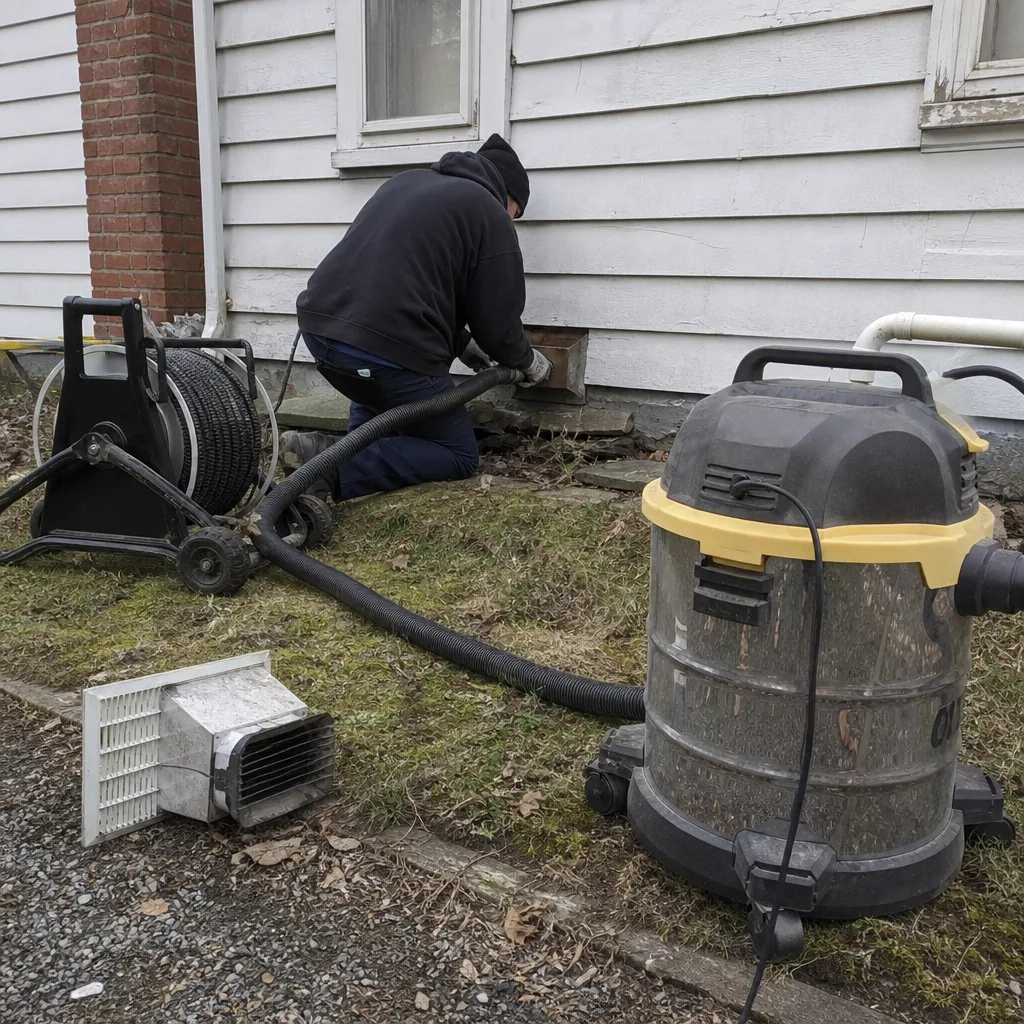 Before
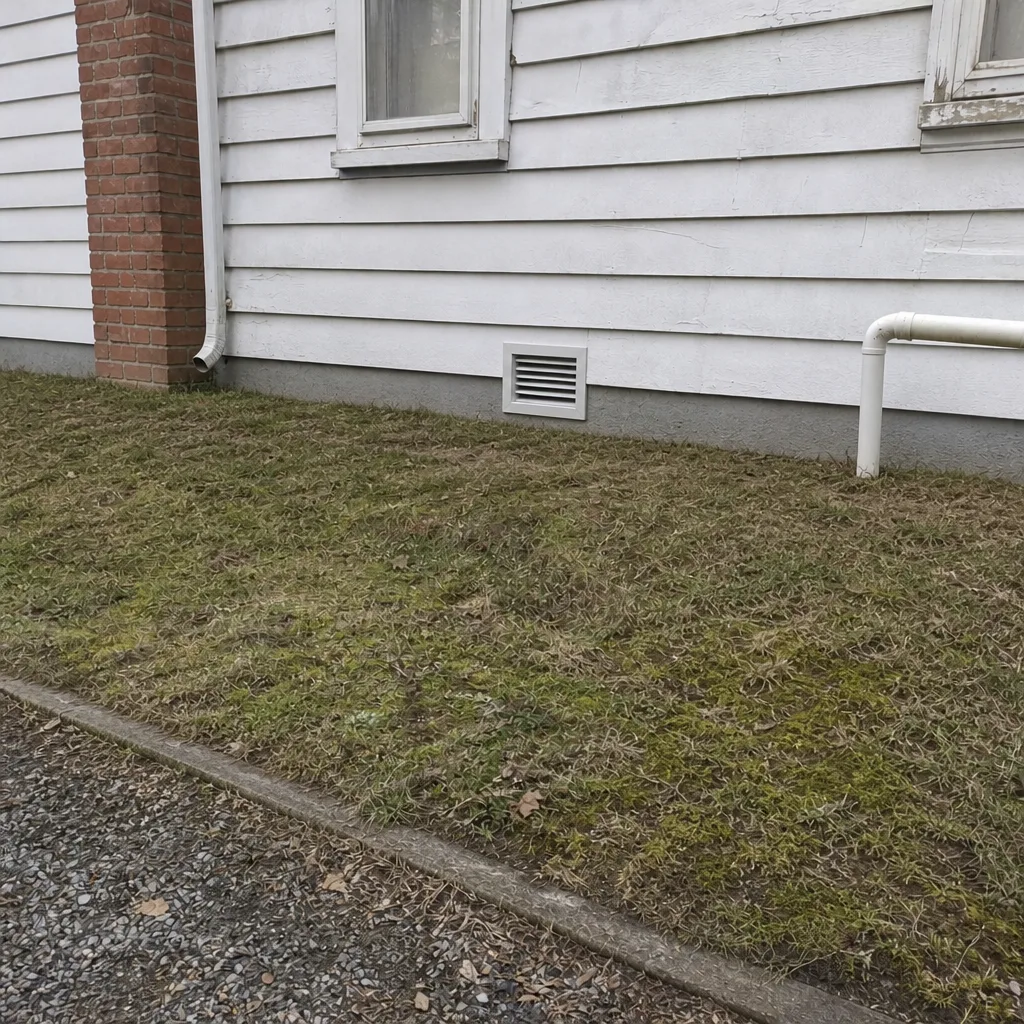 After
When to Call a Professional
Most duct maintenance in Charleston is a job for a professional because the diagnosis is where the real value lies. Call a professional if you’re seeing more dust than usual after a cleaning, if rooms don’t heat or cool evenly, if you smell musty or stale air when the system runs, if you’ve noticed visible sagging or disconnected ductwork in the attic or crawlspace, if your heating and cooling bills have crept up without explanation, or if a home inspection has flagged duct condition. Those are the signals that the issue goes beyond surface cleaning and into the repair and sealing work that requires real diagnostic equipment. Charleston Air Duct Cleaning Pros offers free estimates in Charleston; call (877) 792-6016. We answer 24/7. Fast dispatch from 7am to 7pm, Sunday through Friday.
Frequently Asked Questions
Routine air duct cleaning typically does not require a building permit in Charleston, NY, because it’s treated as maintenance rather than construction. The permit question changes when the work involves modification: cutting new duct openings, adding runs, rerouting ductwork, or altering the mechanical system. The Town of Canaan code enforcement office is the authority that decides on a specific scope; call them before any repair work starts. Estimates on cleaning and repair work are free; call (877) 792-6016 for a written scope you can take to the code office.
The line is between removing what’s inside the duct and changing the duct itself. Cleaning and sanitizing existing duct interiors is typically maintenance; cutting into ductwork, adding branches, rerouting runs, or changing duct material is typically a modification that may require a permit. Small repairs in place, like reconnecting a disconnected flex run, often fall on the maintenance side, but the specific scope matters, so ask before work begins.
Unpermitted duct work during a home inspection typically triggers negotiation: the buyer can ask for it to be brought up to code, walk away, or renegotiate price. The seller also has a disclosure obligation, and unpermitted work is a disclosure item. In the worst cases the work has to be uncovered, inspected, and sometimes corrected, which is expensive. Get a written scope of work for every duct repair and keep the record.
Yes. Homeowner’s policies typically exclude or limit coverage for losses arising from unpermitted or non-code-compliant construction, so a fire or air quality incident traced to unpermitted duct work can lead to a contested claim. The specific answer depends on your policy, which is why we recommend asking your agent directly. The general principle: permitted and inspected work makes for a cleaner claim. Call (877) 792-6016 for a written scope on any duct repair before it starts.
Ask for it in writing before the crew arrives, and ask specifically for the physical description of the work, the permit determination, the materials, and what’s excluded. A contractor who regularly works in Charleston and knows the Town of Canaan permitting process should be able to produce that letter without delay. If a contractor resists putting the scope in writing, take it as a signal about how they handle the rest of the job, and call us to compare.
Sealing existing duct joints with mastic or approved tape is usually treated as maintenance and typically doesn’t require a permit. Sealing that’s part of a permitted mechanical modification, or a large-scale project that changes system air balance, can fall under permit and inspection. The scope of work and the method both matter, so ask before work starts. Call (877) 792-6016 and we’ll put the scope in writing so you can confirm with the code office.
The Bottom Line
Cleaning your ducts in Charleston is not a permit item. Repairing, modifying, or changing the shape of your duct system can be. The distinction matters because the second category carries real consequences: inspections at resale, exposure on insurance claims, and disclosure obligations that follow you into the next transaction. The practical playbook is short. Call the Town of Canaan code office before any repair work starts. Ask the contractor for a written scope of work that states the permit determination explicitly. Keep the records when the work is done, and fold them in with your closing documents. Anything framed as “just cleaning” that turns into a modification is where the trouble starts, and the line is worth knowing before a technician opens a wall in your Charleston home.
If you’re in Charleston and want a straight answer on what your project involves, our team at Charleston Air Duct Cleaning Pros can help. Call (877) 792-6016 for a free estimate. We answer 24/7. Fast dispatch from 7am to 7pm, Sunday through Friday.
Written by the team at Charleston Air Duct Cleaning Pros.