
Last updated November 25, 2026
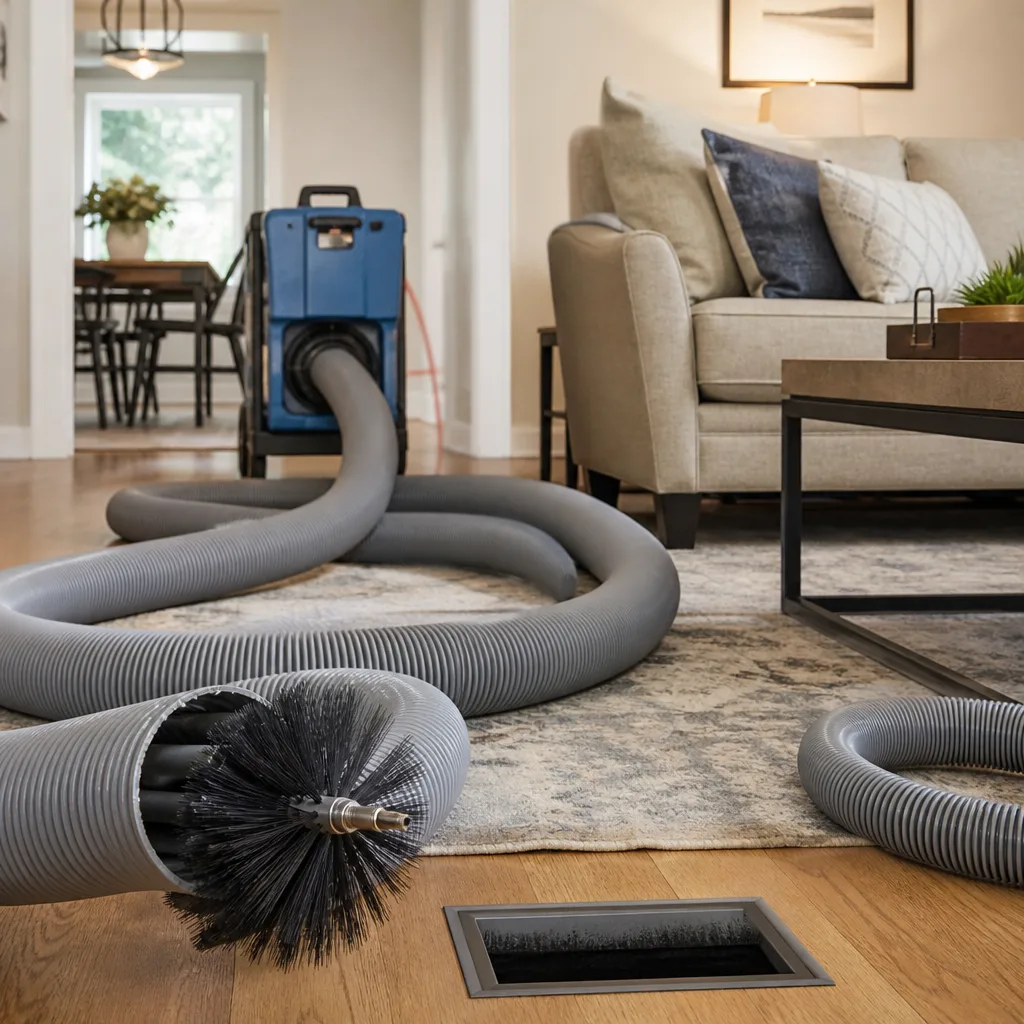 Whole-home duct cleaning
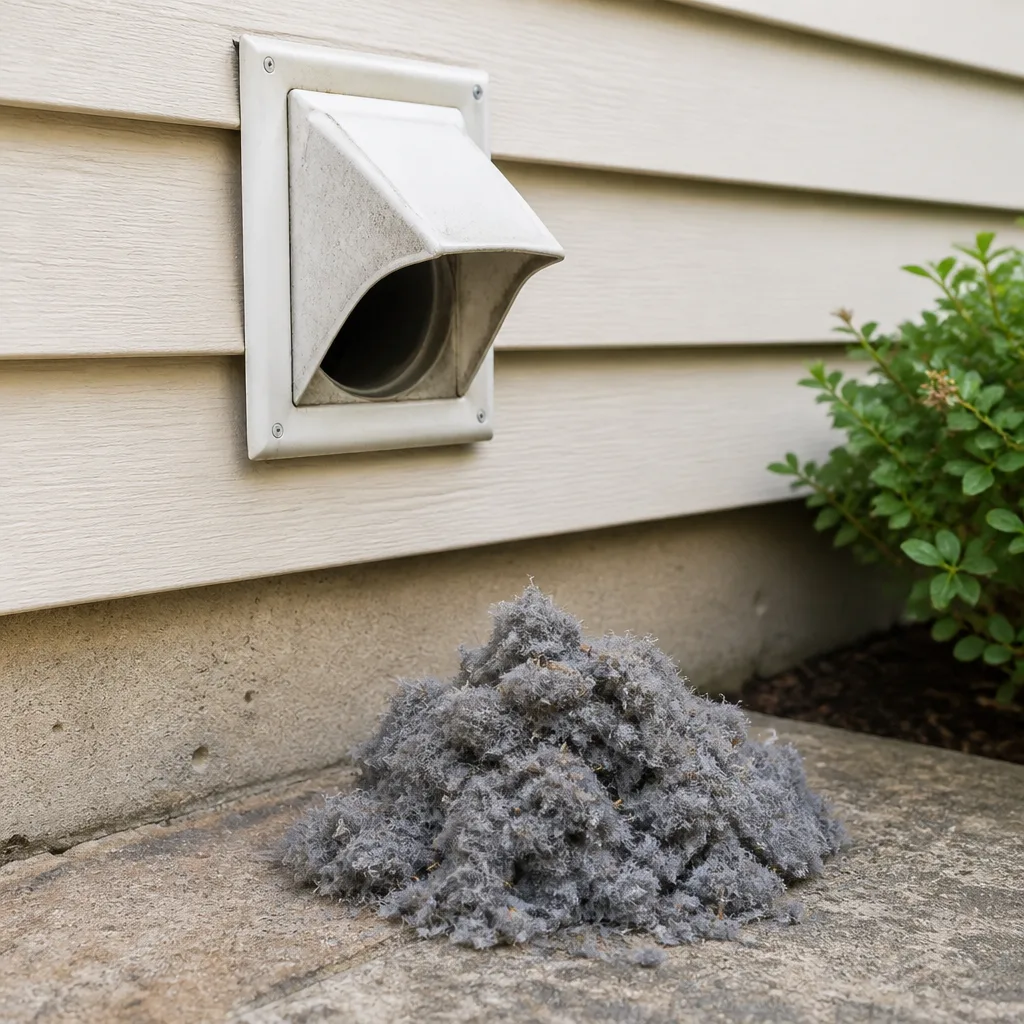 Dryer vent cleaning
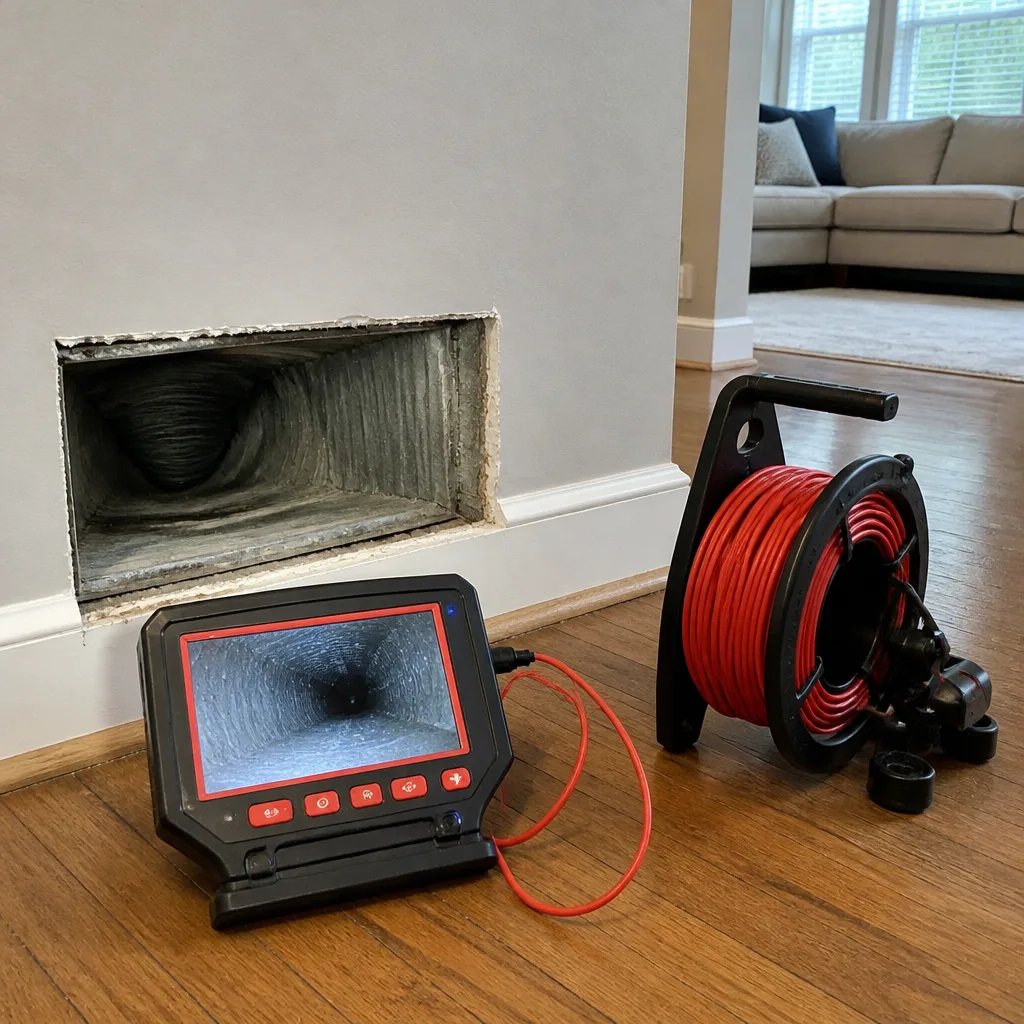 Camera inspection
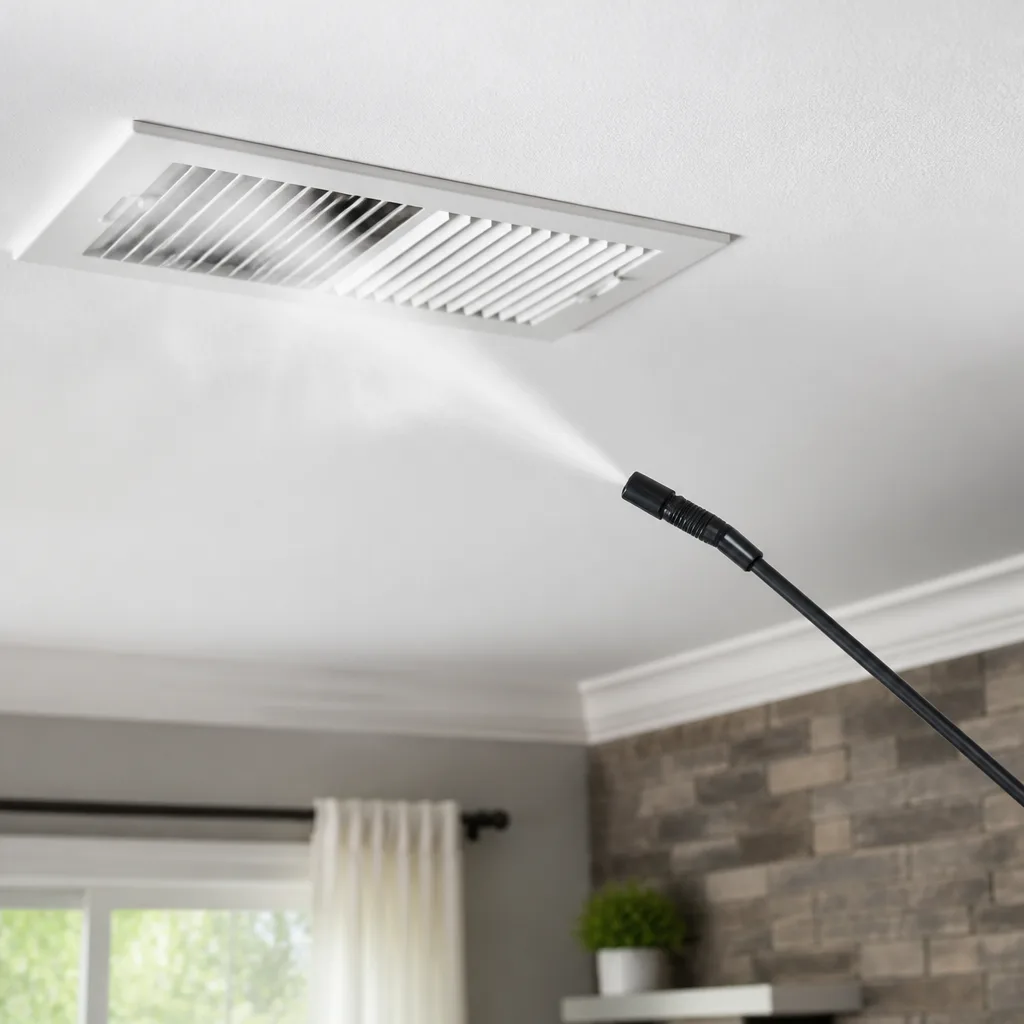 Sanitizing & deodorizing
Whole-system duct and dryer vent check with before-and-after photos - you see exactly what came out of your vents
That "$99 whole-house special" is a bait ad - the real number appears once they are in your hallway, or the "clean" is a shop-vac at the register. We photograph the inside of your ducts before and after instead.
How to Hire an Air Duct Cleaning Contractor in Charleston: A Step-by-Step Guide
Most homeowners in Charleston, NY shop for duct cleaning the same way they shop for a new vacuum: whoever quotes the lowest number wins. That’s the wrong instinct, and not because cheap work is always bad. It’s because duct cleaning has no universal licensing standard in New York State. The person quoting you a suspiciously low figure to clean an entire house and the person quoting several times that amount may both be operating legally. Only one of them will actually clean your ducts. Hiring the wrong contractor doesn’t just waste money. It can tear duct lining, loosen debris that settles into your living space, or leave contamination where it started. This guide walks through the vetting framework our technicians use: the credentials that matter, how to read a quote, the five questions to ask before anyone opens an access panel, and how to verify the work before you pay.
Quick Answer
To hire an air duct cleaning contractor in Charleston, NY, verify the company’s certifications (NADCA membership is the main one that requires real training), ask for a written flat price per system rather than a per-vent quote, and confirm they use negative pressure containment and commercial equipment before they open a single panel. A legitimate contractor will put the scope and price in writing before work starts and will photograph the inside of your ducts before and after.
Key Takeaways
- New York State does not have a universal license requirement for duct cleaning, so credentials and process are what separate a real contractor from a marketing badge.
- A flat price per system, agreed in writing, is the single best protection against bait-and-switch pricing.
- Ask about negative pressure containment before the job, not after. It’s the difference between removing contamination and spreading it.
- Photographs of your own ducts before and after the work are the only honest way to verify a job was done.
Styles & brands we work with
- Whole-home duct cleaning
- Dryer vent cleaning
- Camera inspection
- Sanitizing & deodorizing
Table of Contents
- Why Hiring the Right Duct Cleaner Matters in Charleston
- Credentials That Mean Something (and Badges That Don’t)
- How to Read a Duct Cleaning Quote
- The Five Questions to Ask Before Anyone Opens a Panel
- What Professional Equipment Actually Looks Like
- Red Flags During the Job
- How to Verify the Work Before You Pay
- When Cleaning Isn’t Enough: Repair, Sealing, and Sanitizing
Why Hiring the Right Duct Cleaner Matters in Charleston
Charleston sits in a part of New York where homes run their heating systems hard for a long stretch of the year and then lean on air conditioning through humid summers. That cycle matters for ductwork. The repeated expansion and contraction, plus the moisture that builds up during cooling season, creates conditions where dust doesn’t just sit in the ducts. It cakes along the seams and collects at the joints. When a system runs warm air over that buildup, the smell enters every room.
That’s the practical reason to hire carefully. A contractor with the wrong equipment can make things worse. Consumer-grade vacuums and shop-vac rigs don’t have the airflow or the containment to pull settled debris out of a full duct run. What they do well is agitate it. The debris that was sticking to the duct wall can end up airborne, which is exactly what someone with allergies doesn’t want.
Our technicians have up to 14 years of experience, and in that time the pattern has been consistent: the homes that need the most work are usually the ones where someone paid for a cheap cleaning first. Duct lining tears from oversized brushes. Seams separate from pressure that’s too aggressive. And when sealed ductwork gets damaged, the whole system becomes less efficient at the same time it becomes harder to clean. Getting the hiring decision right the first time costs less than fixing a bad job.
Charleston homeowners and property managers are also dealing with a specific problem: many of the houses in this area have duct systems that were installed decades ago and have never been sealed or checked for leaks. Cleaning a leaky system only goes so far. The real fix is to clean, then inspect for gaps, then seal what you find. That’s why our approach is built around the full system lifecycle rather than a one-time blowout.
Credentials That Mean Something (and Badges That Don’t)
The best credential to look for is membership in NADCA, the National Air Duct Cleaners Association. NADCA membership requires the company to follow a defined cleaning standard and to have staff trained to it. It’s not a universal requirement, but it’s the closest thing the industry has to a real professional baseline. Ask whether the company is a member, and don’t be shy about asking what training their technicians have completed.
Beyond NADCA, EPA-related credentials matter for two specific situations. If the contractor is doing any work involving mold remediation, ask about their process for containing and filtering the air. If they’re sanitizing with chemical treatments, ask what products they use and whether those products are registered for use inside HVAC systems. Our own work uses Abatement Technologies containment equipment for remediation-grade jobs and Guardsman-grade sanitizing treatments where microbial contamination is a concern.
Here’s what doesn’t mean much on its own:
- A website badge with no link. Legitimate associations let you verify membership directly on their own site. A logo image alone proves nothing.
- “Certified” with no organization named. Ask which body certified them and for what.
- Google or Yelp review counts as proof of quality. Reviews tell you how a company handles customers, not how well it cleans ducts. Both can matter. Only one is measurable.
- A general contractor’s license presented as duct-cleaning qualification. It isn’t. Duct cleaning sits outside most states’ licensing frameworks entirely.
One more thing to check: insurance. Ask for a certificate of insurance showing general liability coverage. Any contractor working inside your walls should be able to produce it without hesitation. If they can’t, that’s a stop sign.
How to Read a Duct Cleaning Quote
A suspiciously low bid tells you something specific. It tells you the contractor plans to use lower-grade equipment, skip containment, or charge you extra once they’re on site and your ducts are open. That last tactic is the most common complaint in this industry, and it’s the reason to insist on one thing above all: a flat price per system, agreed in writing before work starts.
Here’s what a quote should include:
- System scope. Which ducts are being cleaned. Supply, return, or both. Number of systems.
- Method. What equipment will be used and whether negative pressure containment is part of the job.
- Access. How they’ll reach the ducts and whether they’ll reseal access points after the work.
- Price. A single number for the work described, not a per-vent figure.
- Deliverables. Whether before-and-after photos are included and whether you’ll receive a written summary.
The per-vent model deserves its own warning. A quote of “X dollars per vent” sounds transparent, but it shifts the risk onto you. Every vent becomes an opportunity to add cost, and there’s no ceiling on the final bill. A flat price per system does the opposite: the contractor bears the risk of doing the job properly within the agreed number. That’s the structure that protects the homeowner.
Ask, too, how the company handles the things they find along the way. A duct system that’s been running for years will often show disconnected joints, gaps at the plenum, or crushed flex duct in a tight attic run. A clean-only contractor will clean around those problems and leave them. Our approach is to repair what we find as part of the same visit, which means air duct cleaning, sealing, and any needed repair happen under the scope you agreed to, not as a surprise second invoice.
The Five Questions to Ask Before Anyone Opens a Panel
These five questions are the vetting framework we use when we evaluate a subcontractor. They’re the right questions for a homeowner to ask too.
- Are you using negative pressure containment? This is the one most homeowners never think to raise, and it’s the most important. Negative pressure containment means the contractor seals the duct system and maintains a vacuum on it throughout the job, so loosened debris is pulled out through a filter rather than pushed into your living space. Without it, the “cleaning” can spread contamination through the house.
- What equipment are you using? The answer should be commercial-grade. Rotobrush and Nikro systems are what professional duct cleaners use. If the answer is a shop vacuum with a brush attachment, the price will be low and the results will reflect it.
- Will you show me before-and-after photos of my ducts? A legitimate contractor should photograph the inside of the ducts at the start and end of the job. It’s the most direct way to verify the work.
- Is the price flat for the system, or does it change once the work starts? Get this in writing. A flat price per system, agreed before work begins, is the right answer.
- What happens if you find damage? Ask whether they’ll repair what they find and how that’s quoted. If they don’t offer repair at all, that tells you the scope of the job you’re buying.
Ask those five questions on the phone before you book. The answers separate the companies worth hiring from the ones worth skipping, and they take about ten minutes to work through.
What Professional Equipment Actually Looks Like
Most residential duct cleaning is done with consumer-grade equipment, which is a big part of why the industry has a reputation problem. The equipment matters because the job is a mechanical problem, not a surface problem. Ducts collect dust, hair, pet dander, and construction debris along the walls and at the joints. Getting that out requires the right airflow, the right agitation, and the right containment.
Rotobrush systems are rotary brush tools designed specifically for residential ductwork. They agitate the duct wall while pulling material into a HEPA-filtered vacuum, which is what allows a thorough clean without damaging the lining. Nikro systems bring a higher airflow capacity for larger jobs and commercial spaces. Abatement Technologies equipment adds containment and air filtration for remediation-grade work, where the air inside the work area needs to be controlled as carefully as the ducts themselves. When we bring equipment like this into a home, the difference shows up in the photos: clean duct walls, not merely a cleared floor.
The other side of equipment is what happens after the cleaning. Air quality products from Honeywell and Aprilaire are part of the broader system, which means our technicians understand how filtration and humidity control interact with the ducts. That fluency matters because a duct system cleaned today will stay cleaner if the filters, humidifier, and ventilation are set up correctly. Cleaning is the start of the process, not the whole of it.
It’s also why HVAC cleaning belongs next to duct cleaning in the conversation. The air handler, coils, and blower pull air through the system. If those components are dirty, clean ducts stay clean for a much shorter time.
Red Flags During the Job
Once the contractor is in your home, watch for these warning signs. Any one of them is worth a conversation; several should make you stop the work.
- No containment setup. Professional work starts with sealing and setting up a vacuum on the system. A crew that opens panels and starts working without that is doing something else.
- Pressure to add services mid-job. A legitimate contractor quotes the full scope up front. If the price changes dramatically once they’ve opened a panel, ask for the reason in writing before agreeing.
- Dirty work area after they finish. Proper duct cleaning leaves the home cleaner, not dusty. If the floors and furniture are coated after they leave, that’s evidence the containment failed or never existed.
- No before-and-after photos. It’s the single most important piece of documentation. A contractor who can’t produce it is asking you to take the work on faith.
- Aggressive brushes on flex duct. Flexible ductwork is common in attic runs and needs gentler tools. Damage from oversized brushes is real and expensive to repair.
You don’t need to hover over the crew. A quick check of the work area and a request for photos at the end covers most of it. If something feels off, ask. A good contractor will explain what they’re doing and why.
How to Verify the Work Before You Pay
Verification is simple, but it needs to happen before the final payment. Here’s what to check:
- Before-and-after photos. Ask for them in the same session. The photos should show the inside of the ducts before cleaning and after, in the same locations.
- A walkthrough of the vents and access points. Look for properly resealed panels, no loose duct runs, and a clean work area.
- A written summary. The contractor should tell you what they found and what they did, including any repairs or sealing.
- No surprises on the invoice. The final price should match the written estimate. If additional work was done, it should have been quoted and approved in writing before it happened.
If any of that is missing, don’t settle. The verification step is where the good contractors separate from the ones who won’t stand behind their work. Ask them to finish it before you sign off.
When Cleaning Isn’t Enough: Repair, Sealing, and Sanitizing
A thorough cleaning fixes what’s in the ducts. It doesn’t fix what’s wrong with the ducts. Leaky seams, disconnected joints, crushed runs, and dirty air handlers are separate problems, and they’re the most common reason a cleaned system still underperforms.
That’s where Charleston Air Duct Cleaning Pros is structured differently from a clean-only contractor. We cover the full lifecycle: cleaning, repair, sealing, and sanitizing, with commercial-grade equipment on every job. Duct repair and sealing close gaps that waste heating and cooling dollars and let airborne dust back in. Sanitizing handles microbial contamination when the inspection finds it. Dryer vent cleaning addresses the lint buildup that’s a leading residential fire risk, and it’s on our service menu as its own service, not an afterthought. For property managers in Charleston running multiple systems, that scope means one contractor instead of three.
Common Mistakes to Avoid
- Booking based on the cheapest quote alone. A low price usually reflects a per-vent model or lower-grade equipment. It signals a different process, not a bargain.
- Skipping the containment question. Negative pressure containment is the single biggest difference between removing contamination and redistributing it. Ask before you book.
- Paying before the verification. Settle the invoice only after the photos and walkthrough are done.
- Skipping the HVAC air handler. Dirty coils and blowers pull dirt back through cleaned ducts in a short time. Clean the system, not just the ducts.
- Assuming a general contractor’s license means something here. Duct cleaning sits outside New York State’s general licensing framework, so the credentials that matter are NADCA membership and equipment, not a license number.
- Ignoring the dryer vent. Many homeowners in Charleston only think about duct cleaning and leave the dryer vent untouched. It’s a fire risk and it deserves a dedicated visit.
- Hiring a clean-only contractor on an old system. An aging duct system in Charleston often needs repair and sealing alongside cleaning. Clean-only leaves the leaks untouched.
See the difference
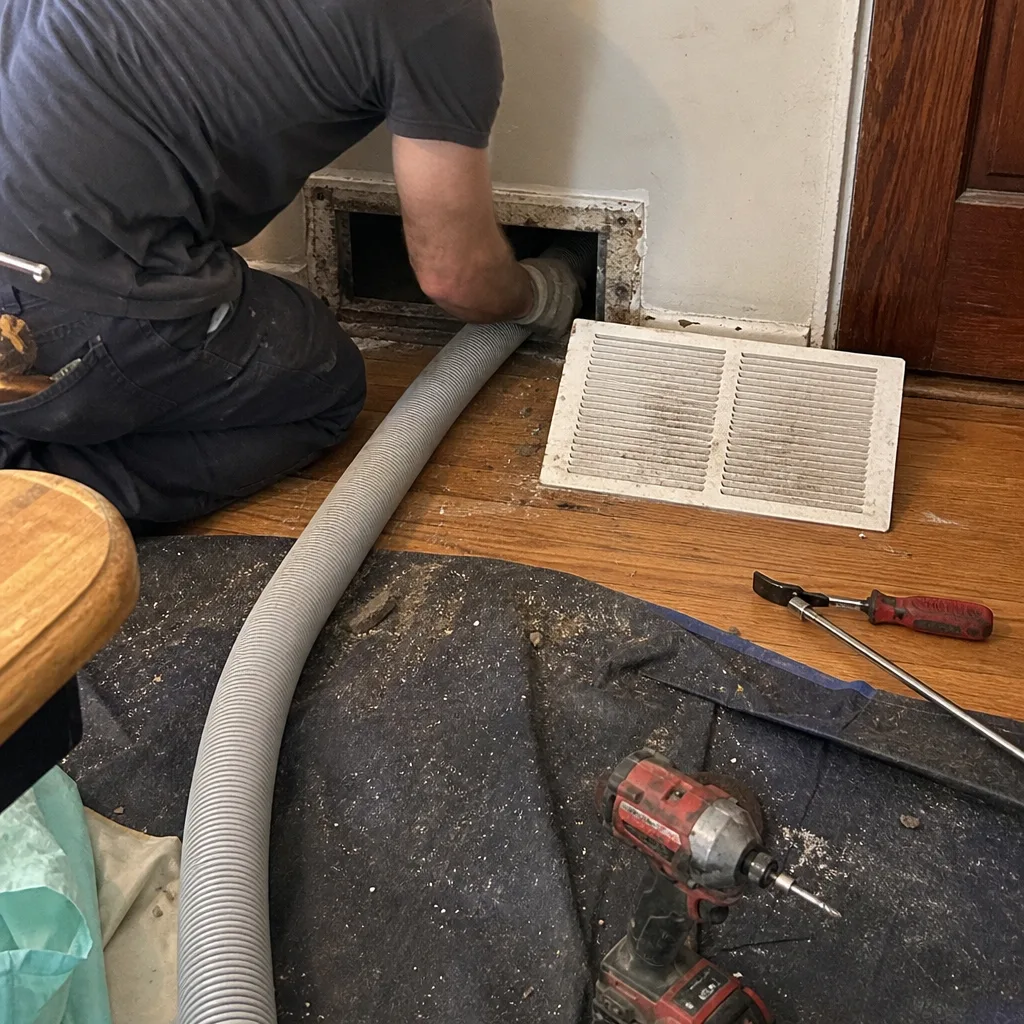 Before
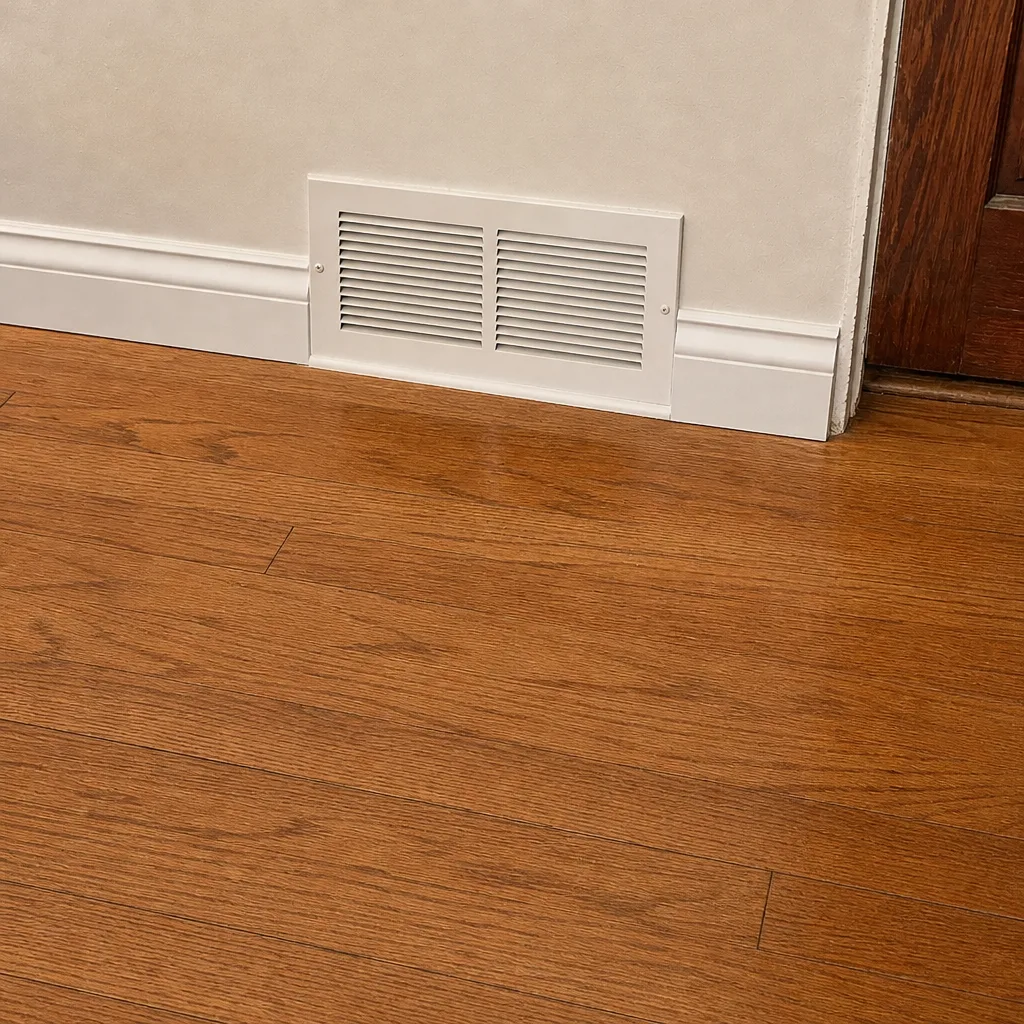 After
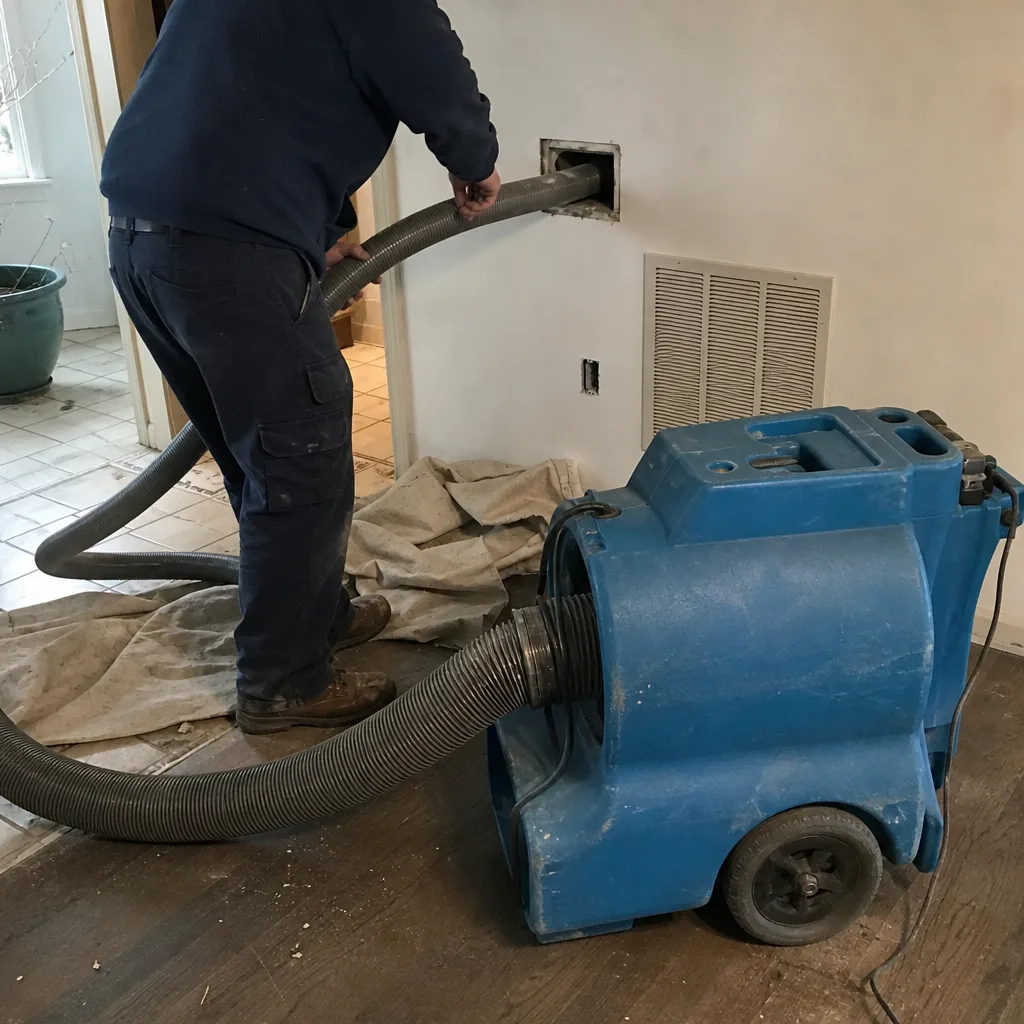 Before
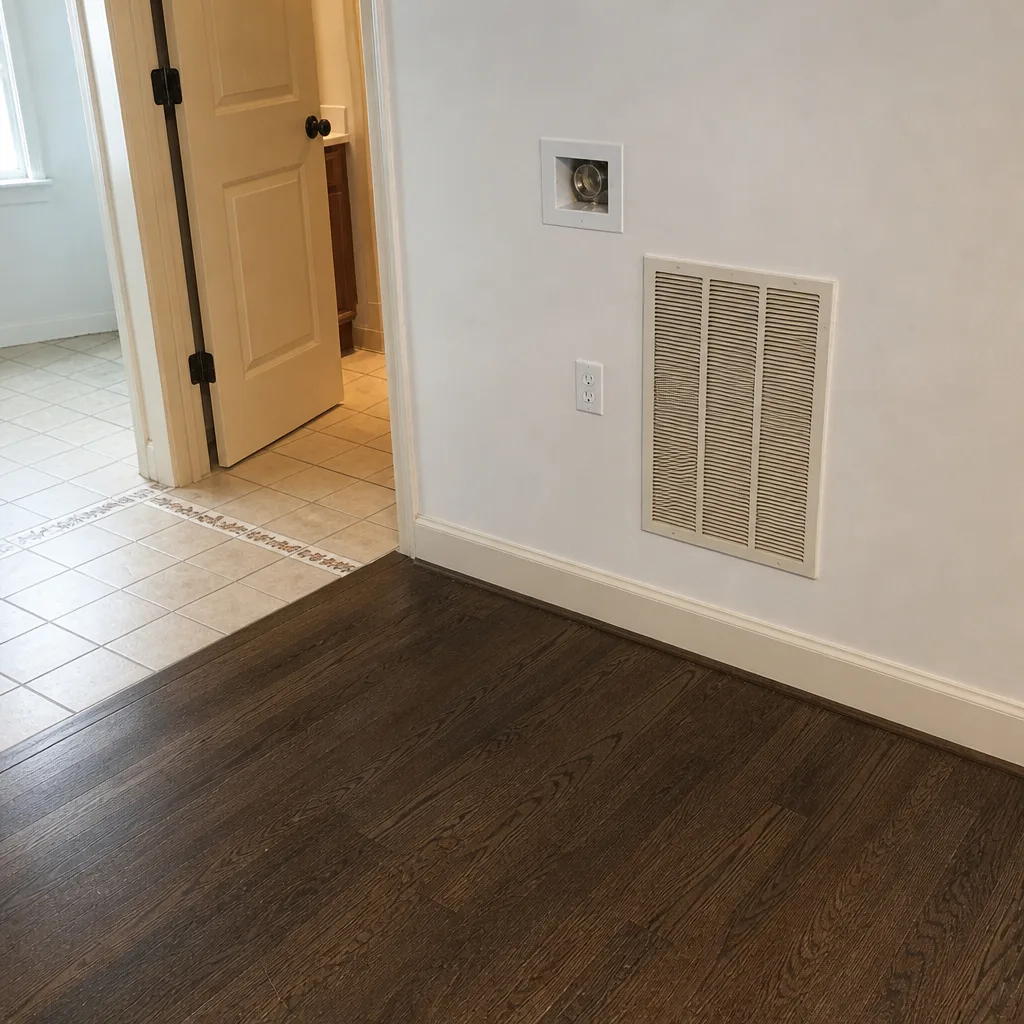 After
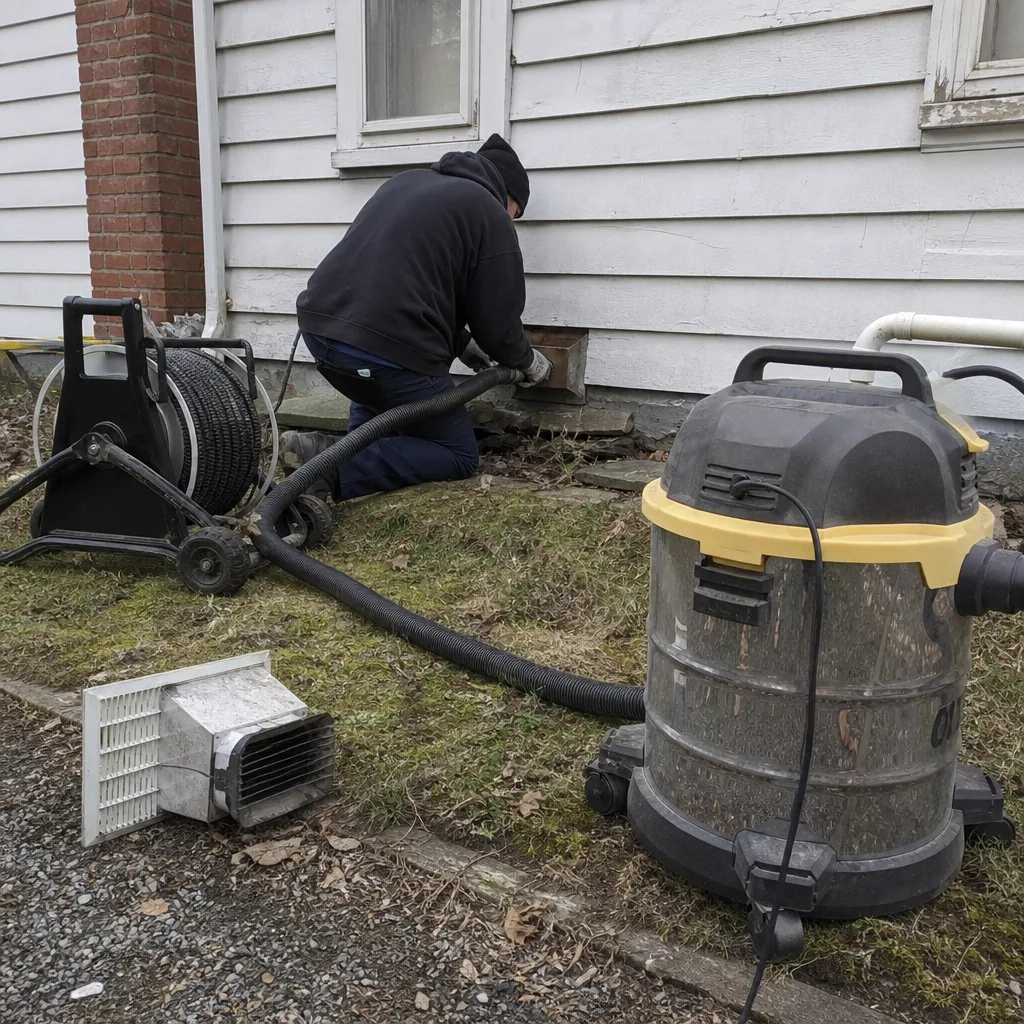 Before
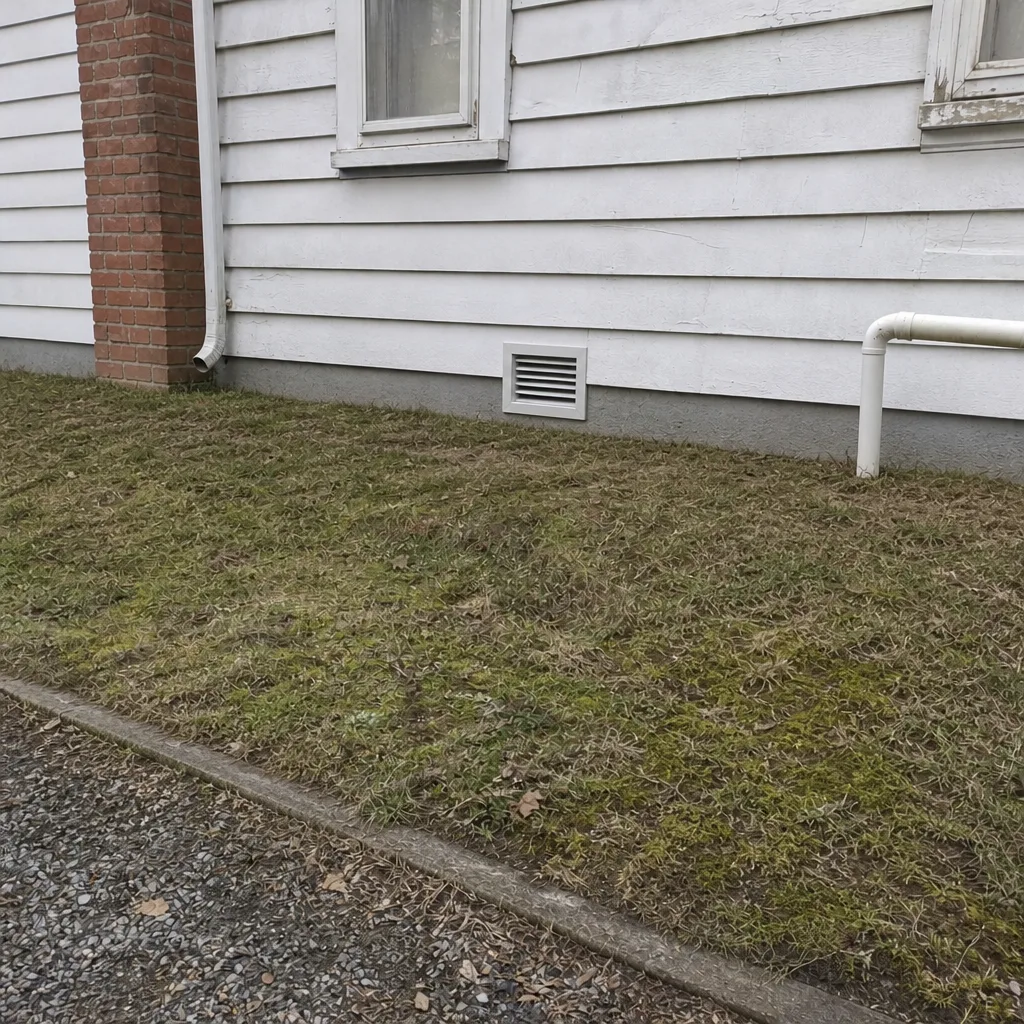 After
When to Call a Professional
Call a professional when the signs are visible. Persistent dust on surfaces shortly after cleaning, musty odors that get worse when the system runs, unexplained allergy symptoms that ease away from home, and visible debris at the vents are the common ones. High energy bills can also point to a leaky duct system, which needs sealing rather than cleaning alone.
For properties with older ductwork, a system inspection is worth scheduling every few years even without obvious symptoms. And if you’ve had a renovation, a pest problem, or a water event, that’s a direct reason to have the system looked at.
Charleston Air Duct Cleaning Pros offers free estimates in Charleston. Call (877) 792-6016. We answer 24/7. Fast dispatch from 7am to 7pm, Sunday through Friday.
Frequently Asked Questions
Air duct cleaning in Charleston typically runs in the several-hundred-dollar range for a single-system home, with the exact price set by the written estimate based on the number of systems, duct access, and condition of the ducts. The number to focus on is a flat price per system, not a per-vent quote. Call (877) 792-6016 for an exact quote, estimates are free.
Cheaper quotes almost always reflect a different process: consumer-grade equipment, no negative pressure containment, or a per-vent price structure that grows once work starts. A flat price per system from a contractor using Rotobrush or Nikro equipment will be higher, and it covers the actual job. Call (877) 792-6016 for an estimate in Charleston, estimates are free.
Before-and-after photos of your own ducts are the answer. A legitimate contractor photographs the inside of the system before cleaning and after, and provides a walkthrough of the vents and access points. Our approach includes those photos as part of the job. Call (877) 792-6016 to schedule an estimate.
Most homes benefit from cleaning every few years, with more frequent visits for homes with pets, allergies, recent renovation, or a system that’s visibly collecting dust. A leaky or unsealed duct system needs repair before a cleaning schedule matters. Call (877) 792-6016 to get the system assessed, estimates are free.
No, New York State does not have a universal license requirement for air duct cleaning. That’s exactly why credentials like NADCA membership, insurance coverage, and the equipment a contractor uses matter more than a license number. Call (877) 792-6016 for an estimate from a contractor equipped for the full scope of the job.
Duct cleaning removes debris from the ducts themselves. HVAC cleaning covers the air handler, coils, and other components that pull air through the system. Doing only one leaves part of the system dirty, which is why we offer both. Call (877) 792-6016 to schedule an estimate for your Charleston home.
The Bottom Line
Hiring a duct cleaner in Charleston, NY comes down to a handful of checks. Verify NADCA membership and insurance. Insist on a flat price per system in writing before work starts. Ask about negative pressure containment, equipment, and photos. Watch for the red flags during the job and verify the results before you pay. Those steps protect you from the two most common failures in this business: contamination spread through a home and duct lining damaged by the wrong tools. Our technicians have up to 14 years of experience and use Rotobrush, Nikro, and Abatement Technologies equipment on every job. Call (877) 792-6016. We answer 24/7. Fast dispatch from 7am to 7pm, Sunday through Friday. Estimates are free.
Written by the team at Charleston Air Duct Cleaning Pros.