
Top Signs You Need Air Duct Cleaning Service – Don’t Ignore These
Visible dust on a supply register means dust has already coated the inside of your ductwork to the point of overflow. It isn’t a warning sign. It’s a late confirmation, the point where the system can no longer hold what’s built up inside it. The actual warning signs show up weeks or months earlier, and most homeowners in Charleston walk past them every day without connecting them to their ducts. The short answer to when you need air duct cleaning: when you notice the early signals on this list, or when your home has had a renovation or water event, whether or not you notice anything at all.
If you’d rather not crawl around with a flashlight checking registers yourself, call (877) 792-6016 and we’ll take a look.
Key Takeaways
- Dust on vents is a late sign, not an early one. The useful signals come before it.
- Uneven room temperatures, faster filter loading, and new condensation near registers are the early indicators worth watching.
- Charleston’s humid summers and heating-season particulate speed up buildup compared to drier climates.
- Renovation dust and water damage create cleaning timelines that don’t wait for symptoms.
- You can inspect inside a register with a flashlight and phone camera before you call anyone.
What are the early warning signs of duct buildup?
The earliest signs of duct contamination are changes in how your HVAC system behaves, not what you can see on the vent cover. Dust coating a register is the visible symptom people write about, but it appears once accumulation inside the ductwork has already become substantial. The earlier signals are subtler and easy to dismiss as “the house being the house.”
Watch for these:
- Room temperatures that weren’t always uneven. A bedroom that used to cool as well as the living room now runs a few degrees warmer in summer or cooler in winter. Duct contamination restricts airflow in ways that hit distant rooms first.
- Filters loading faster than their rated interval. A filter rated for three months that’s gray and matted at six weeks is telling you something upstream is shedding debris back into the return.
- New condensation patterns near supply vents. Moisture collecting on or around a register where it didn’t before often points to restricted airflow and a pressure change in the system.
- A faint, dry, dusty smell when the fan kicks on. Not musty yet, just “old.” That smell is airborne debris moving through the system.
These signs appear well before the obvious ones. Catching them early is the difference between a straightforward cleaning and a bigger remediation job in Charleston.
Why do these signs show up before visible dust?
Airflow changes before the surface tells you anything. Ductwork accumulates debris gradually, and in the early stages that debris lining the walls of the duct adds resistance without yet spilling out onto the register grill. Your system feels that resistance first. The blower works against it, the distant rooms lose pressure first, and the filter catches what’s being stirred up. Only when the coating is thick enough to shed visible particles do you see dust on the vent cover.
That ordering matters. A homeowner watching for dust is watching for the last domino to fall. The earlier dominoes are the temperature swings, the filter loading, the condensation.
Distinguishing duct contamination from other HVAC problems is the hard part, because several things mimic the same symptoms. A dirty evaporator coil, a failing blower motor, a refrigerant charge that’s low, and a clogged filter all produce weak airflow or uneven cooling. A duct inspection is how you separate them. If the ducts are clean and the symptoms persist, the issue is in the equipment. We repair and seal what we find in the ductwork, but we’ll also tell you when the problem is elsewhere so you’re not paying for a cleaning that won’t fix it. Our air duct cleaning work starts with an honest look at what’s actually going on.
How does Charleston’s climate speed up duct buildup?
Charleston’s humid summers and heating-season particulate load shorten the buildup timeline compared to drier regions. Moisture in the air makes fine dust clingier. When warm, humid air moves through a cooled system, condensation forms where it wouldn’t in a dry climate, and that damp environment gives that dust something to stick to. Add the pollen and particulate that heating season pushes through a running furnace and you have two distinct stress periods per year instead of one. Homeowners in Charleston with south-facing return ductwork may notice buildup at the return grille before the supply registers show anything, since that’s where the system pulls the most debris-heavy air before it’s filtered. That’s a distinction we point out because so many people clean the wrong end of the system first.
Dry regions tend to have longer intervals between cleanings because the dust stays loose and the filter catches more of it. Here, that dust has more opportunity to adhere to duct walls, and once it adheres it’s not coming off with a shop vac. It takes agitation and negative-pressure extraction to actually remove a bonded layer. That’s part of why we bring professional Charleston Air Duct Cleaning Pros equipment to every job. The Abatement Technologies containment and filtration gear is used to keep what we dislodge from drifting back into your living space.
How do I check my own ducts before calling anyone?
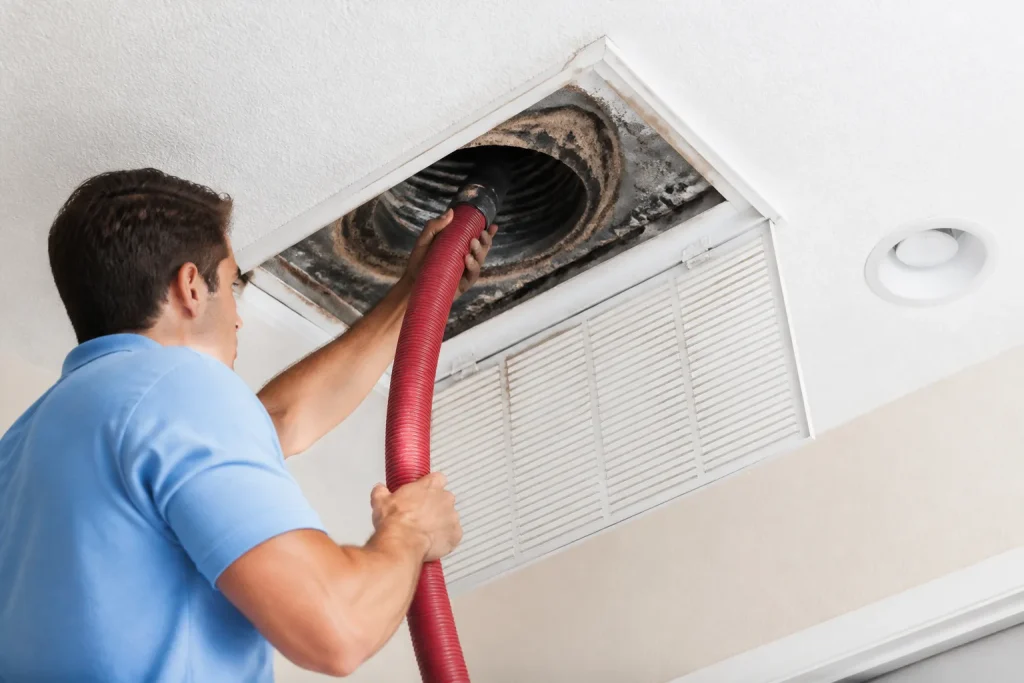
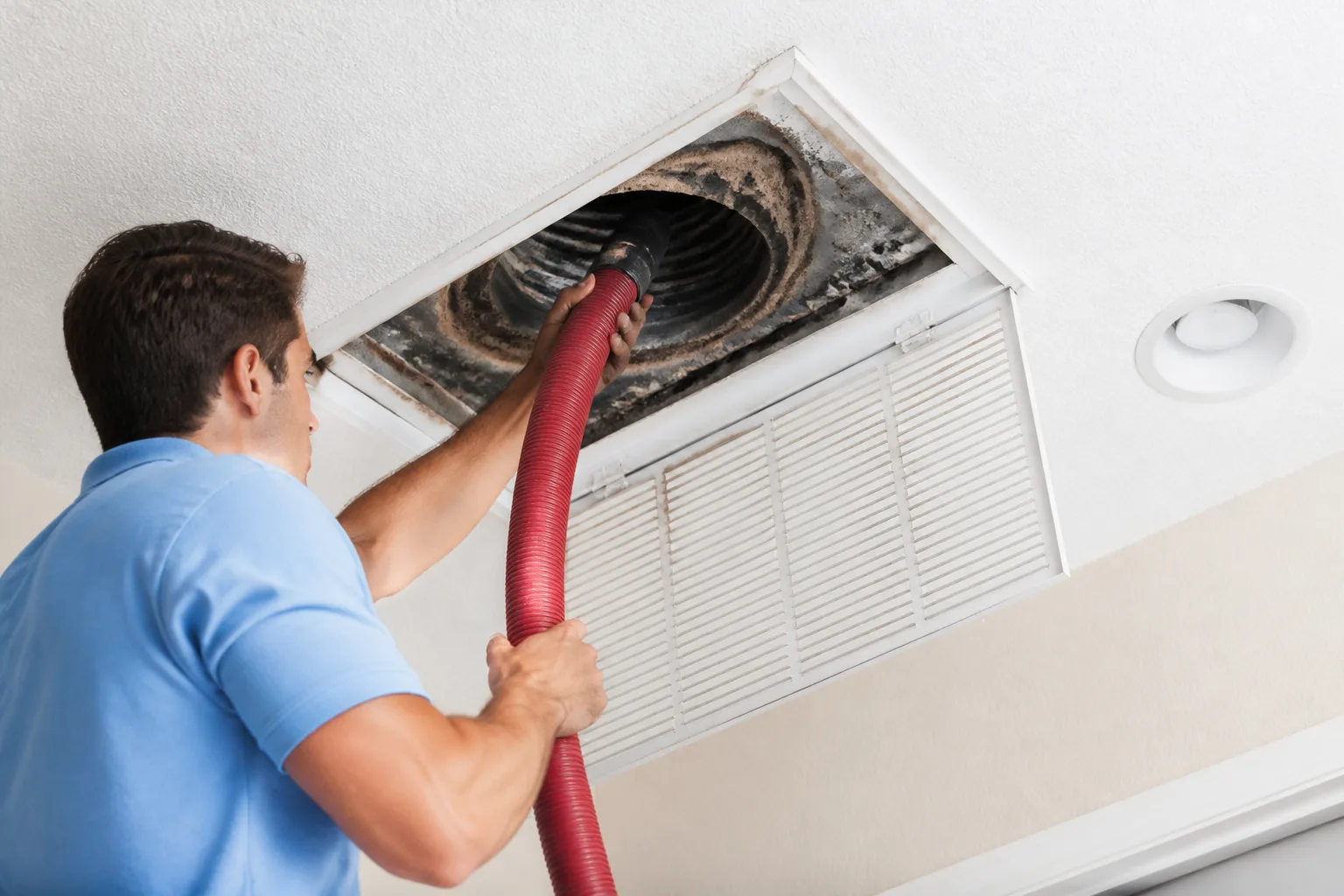
You can inspect inside a register yourself with a flashlight and your phone camera in about ten minutes, and it will tell you whether it’s time to call. No special tools required.
Here’s the simplest method:
- Turn the system off at the thermostat.
- Remove a supply register cover in a room you’re concerned about. Most are held by two screws.
- Shine the flashlight down into the duct and look at the metal walls, not the air. Look for a matte coating, clumps, or anything stuck to the interior.
- Snap a photo with your phone camera so you have a clear reference. Compare a register that cools well against one that doesn’t.
- Repeat at a return grille, which is usually the dustiest end.
If the duct walls look dusty but smooth, you’re likely in the early stages. If you see fuzzy clumps, debris that’s clearly stuck, or visible discoloration on the duct liner, that’s the advanced stage and it’s worth having it looked at. This is not a step-by-step guide to cleaning the ducts yourself. It’s a way to gather information honestly before you decide what to do, and it saves you from paying for a cleaning on ducts that don’t need it yet.
Which events trigger cleaning no matter what?
Two things force a cleaning whether or not you see a single symptom: a major renovation and a water-damage event. Those timelines are non-negotiable.
After a renovation that involves drywall work, sanding, or demo, fine construction dust enters the return system and settles throughout the ductwork. It’s not the dust you see on the floor. It’s finer, and it gets into the supply side, where a standard filter never sees it. Cleaning after the drywall is finished is what prevents that dust from cycling through the house for years.
Water damage is the other trigger. When a pipe fails or a roof leaks and moisture gets into the ductwork, the environment inside those ducts becomes favorable for microbial growth. Waiting to see musty air or health symptoms lets that growth establish. If you’ve had water intrusion anywhere near the ductwork, cleaning and sanitizing is the correct call regardless of symptoms. We apply Guardsman-grade sanitizing treatments where microbial contamination is a concern; that step exists for these situations, not as an upsell on a routine job. If you’ve torn out carpet or dried out an interior after water, that’s a cleaning trigger. If you’ve had a plumber inside for a leak that reached the ceiling near the returns, that’s a trigger too.
When should you stop checking and call a pro?
You should call a professional when you’ve confirmed buildup inside a register that doesn’t wipe away, when the early signs on this list persist after a filter change and a coil check, or when a renovation or water event has happened, even if everything looks fine. Cleaning a duct system properly is not a homeowner job in the general sense. It requires agitation to break the debris free from the duct walls and negative-pressure extraction to pull it out, which is why we use Rotobrush and Nikro systems and Abatement Technologies containment. Consumer vacuum rigs can knock loose what’s on the surface, but they can’t create the pressure differential to remove the bonded layer and they can’t keep it out of your air while they’re working.
If you’re in Charleston and you’d rather have someone look, that’s what we do. We offer air duct cleaning and a full system scope so you don’t need a second contractor. You’ll get a written estimate and a flat price agreed before any work starts.
Related services in Charleston:
- dryer vent cleaning – fire prevention starts at the dryer vent, and lint buildup is a trigger independent of your ducts.
- hvac cleaning – if the coil or blower is dirtier than the ducts, that’s a separate job with its own cleaning requirements.
The Bottom Line
The signs everyone already lists are real, but they show up last. Uneven rooms that used to be even, filters loading faster than rated, condensation near a supply vent, and a dry smell when the fan turns on are the earlier signals. Those are the ones worth acting on. If you’ve done any major renovation or dealt with water damage, the cleaning timeline is set regardless of what you see or smell. If you’re in Charleston and need help, Charleston Air Duct Cleaning Pros offers free estimates. Call (877) 792-6016.
Frequently Asked Questions
You need it when early signs are present – uneven temperatures that changed, filters loading faster than their rated interval, or new condensation near supply vents – or when you’ve had a renovation or water event. Visible dust on vent covers is confirmation, not an early warning. Call (877) 792-6016 for a free estimate if you’re unsure.
It may, if contamination is the cause. If the ducts are clear and the unevenness persists, the issue is more likely in the equipment – a dirty coil, a failing blower, or low refrigerant. That’s why we check the system before recommending cleaning. Call (877) 792-6016 to get it looked at.
There’s no universal interval. Homes in humid climates like Charleston build up faster than dry ones, and post-renovation or post-water-damage events reset the clock regardless. The honest answer is to inspect inside a register and decide from what you see. If you want a second opinion, call (877) 792-6016 and we’ll tell you whether it’s time.
Yes, in two situations: after a major renovation that produced fine dust, and after any water intrusion near the ductwork. In both cases cleaning and sanitizing is required regardless of whether symptoms appear. Outside those, it comes down to what you find when you look inside. Call (877) 792-6016 for a free estimate.
Written by the team at Charleston Air Duct Cleaning Pros.
Need Air Duct Cleaning Help?
Call Charleston Air Duct Cleaning Pros - the local pro we connect you with is licensed and insured, here with fast help in Charleston.
(877) 792-6016