
Emergency Air Duct Cleaning Near Me: What Charleston Homeowners Should Do First
If you’re searching for emergency air duct cleaning near me in Charleston because something has gone wrong inside your ducts, the first move is not to call anyone. It’s to walk to your thermostat and switch the system to off. Every minute the blower keeps running, it moves whatever is in your ducts – smoke residue, rodent droppings, mold spores, sewer backup mist – through every room in the house. Shut it down, then read on. If you’d rather not sort through it alone, call (877) 792-6016 and we’ll walk you through what to do next.
What Actually Counts as a Duct Emergency in Charleston?
A true duct emergency in Charleston is any situation where contamination is actively moving through your system and into your living space. That’s a narrower list than most people assume. A musty smell after a wet stretch of weather is unpleasant, but it isn’t a four-alarm event. Smoke residue from a kitchen fire, a raccoon or squirrel that got into the return, standing water near the air handler, or that unmistakable sewage odor after a plumbing backup – those are genuine emergencies. The difference matters because it changes how fast you need to act and how the job gets done.
Here’s how we sort the calls that come in:
- Fire or smoke residue. Even a small stovetop fire leaves acidic soot that corrodes blower components and coils over time. This is a real emergency.
- Vermin intrusion. Rodents and birds leave droppings, nesting material and urine in duct runs. The contamination is biological and needs containment, not just a shop vac.
- Mold odor after a leak. A persistent damp, earthy smell that doesn’t clear when the weather dries out usually means growth inside the system.
- Sewage backup near the air handler. Any standing water with a sewer smell near HVAC equipment is urgent.
- Pest chemical or dead-animal odor. Something died in a duct run, or a pest company treated nearby and the smell is coming through vents.
- Routine “it just feels dirty” calls. Those are scheduled cleanings, not emergencies, and we’ll tell you so honestly.
In our experience, the calls that feel most urgent in Charleston are the ones tied to water and heat – a humid summer after a slow leak, or smoke from a kitchen mishap. Those are the two we see most, and both benefit from fast action.
Shut It Down First: The Steps to Take in the First Five Minutes
Turn the system off at the thermostat, then cut power to the air handler at the breaker if you can do it safely. That’s the single most important thing you can do, and it takes less than a minute. Every cycle the blower completes while contamination is present pushes particles deeper into supply runs and into rooms you haven’t even thought about. A system that’s off just holds what’s in the ducts where it is.
After the system is off, work through this list in order:
- Switch the thermostat to Off, not just down. Auto and fan-on settings still run the blower.
- Shut power to the air handler at your electrical panel if it’s labeled and reachable.
- Close supply and return registers in rooms where the odor or contamination is strongest so air can’t drift between spaces.
- If there’s visible mold or water, keep people with respiratory conditions, young kids and pets out of those rooms.
- Bag any evidence you can safely collect – a dead rodent, a chunk of soot-stained filter – so the technician knows what they’re dealing with.
- Don’t spray air freshener into registers. It masks the smell and can hide the exact trace a technician needs.
One thing we tell every Charleston homeowner: don’t run a box fan in the room where the smell is strongest. It feels like it’s helping. It’s actually pulling contaminated air out of the ducts and pushing it through the room. We’ve seen a “small pest issue” become a whole-house problem this way. Leave airflow alone until the technician arrives.
Why Calling a General HVAC Tech Can Make the Problem Worse
A general HVAC technician is trained on the mechanical side – refrigerant, compressors, burners, controls. That’s valuable work, but it’s a different job from contamination cleanup. When you call a standard HVAC tech for a rodent intrusion or a smoke event, the most common outcome is that they confirm the system still runs, change the filter, and tell you the ducts look fine. The contamination stays put, and now you’ve paid for a service call without solving the problem.
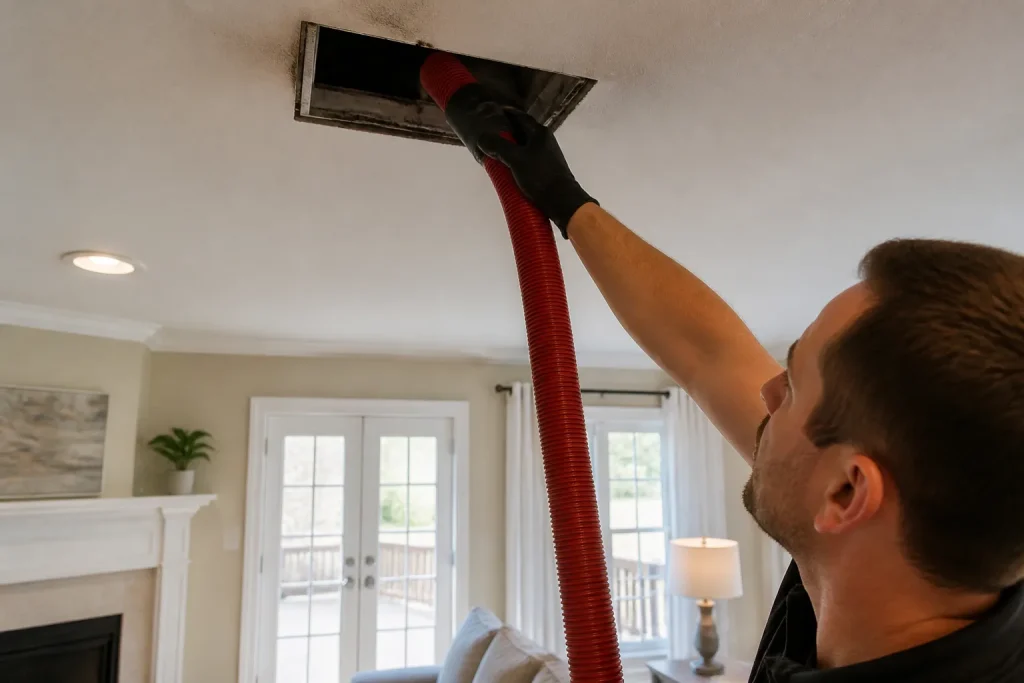
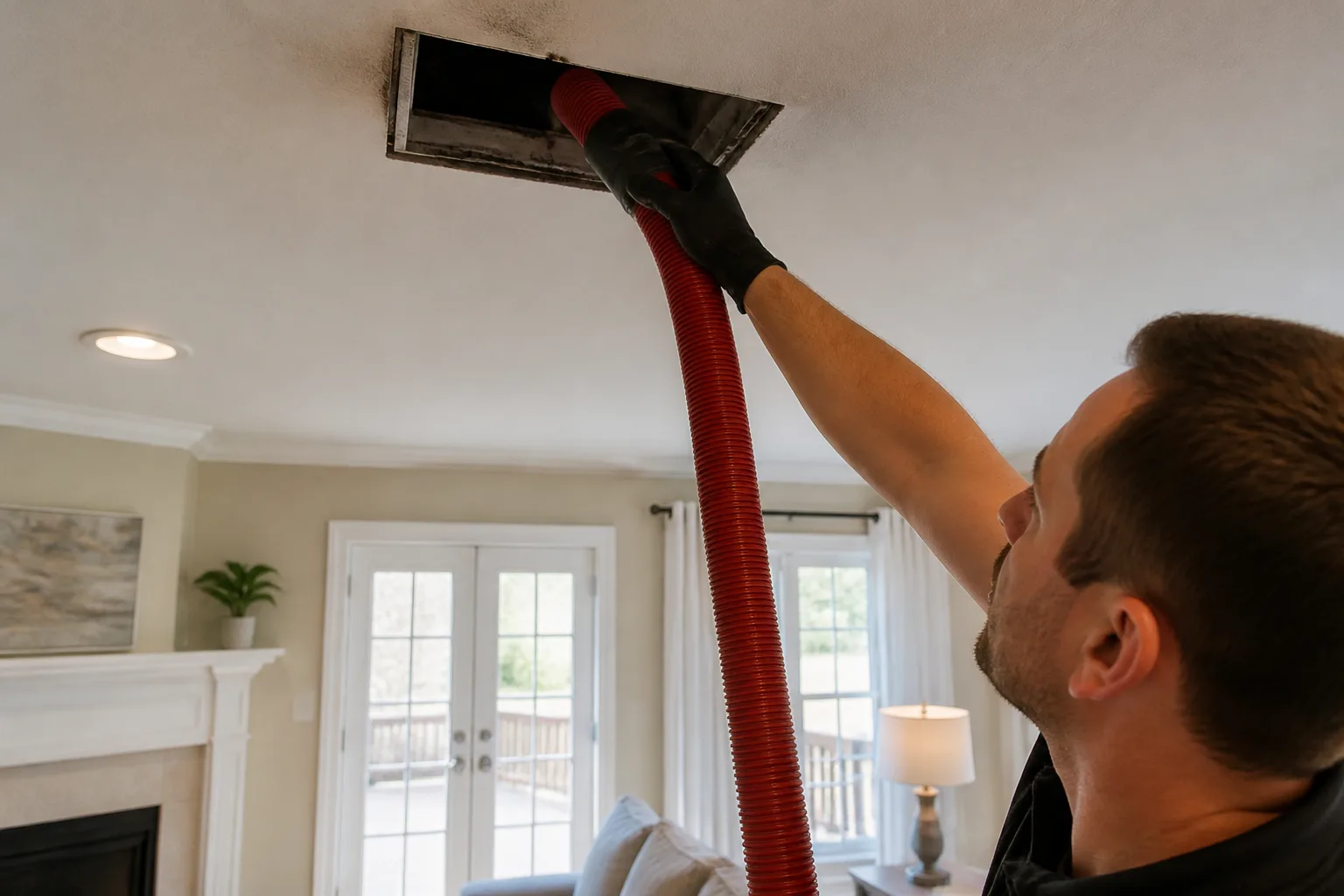
In the worst case, a well-meaning tech will vacuum a return trunk with a shop vac they carry on the van. That pulls some visible debris out of the trunk but does nothing for the supply branches, the coil, or the loose contamination that’s already settled. Worse, it can stir particles up without proper containment and spread them further into the house. That’s why we bring Charleston Air Duct Cleaning Pros equipment to every job – Rotobrush and Nikro systems with HEPA filtration and negative-pressure containment that a shop vac can’t match.
For true contamination events, Abatement Technologies containment gear isn’t optional. Real remediation work means sealing off the work area, creating negative pressure so particles stay in the ducts and out of your living room, and filtering the exhaust so nothing escapes. A standard HVAC call doesn’t include any of that. Skipping it makes the eventual cleanup more expensive, because more of the house is now contaminated. Calling the right specialist first is almost always the cheaper move.
What to Tell Us When You Call
The details you give on the phone determine what shows up at your door – the right equipment, the right containment setup, the right number of technicians. A vague “my ducts smell bad” gets a much different response than “I have a dead squirrel in the return trunk and I saw flies this morning.” We’d much rather hear the ugly details than arrive and find something we weren’t prepared for.
Here’s what we need to know when you call:
- What happened. Fire, pest, water, sewage, or just a smell with no obvious source.
- When it started. Today is different from three weeks ago, especially for mold.
- How many rooms are affected. Whole-house versus one wing changes containment setup.
- Age and location of the air handler. Attic, closet, basement, or garage. Access matters.
- What you’ve already done. If you already ran the system for hours, tell us. We plan for it.
- Visible contamination. Droppings, soot, mold, water stains, or anything crawling.
Say the word “rodent” and we plan for containment and HEPA filtration. Say “smoke damage” and we bring the right soot tools. That single detail on the phone is often the difference between a truck-mount arriving and a tech showing up with a shop vac and a shrug. The equipment matters, but so does the call.
Once you’ve made the call, keep the system off. Keep kids and pets out of affected rooms. And don’t try to clean registers yourself with a household vacuum – that just spreads the problem.
How Same-Day Duct Cleaning Works Differently From a Scheduled Visit
Same-day work is set up for speed and containment, not for a full top-to-bottom service. A scheduled air duct cleaning in Charleston is paced for a thorough job: every register opened, every trunk and branch inspected, the coil cleaned, the dryer vent checked while the truck is out, and a full before-and-after report at the end. Same-day contamination response focuses on isolating and removing the active threat first, then scheduling the deeper restoration work afterward if more is needed.
Mechanically, the response job usually looks like this:
- Containment goes up before anything else. Plastic sheeting and negative-air machines seal off the work area so particles don’t migrate.
- Access points are cut or opened at strategic spots to reach the contaminated run, not just the registers.
- HEPA vacuum and brushing remove the contamination at the source, then the work area is cleaned, sealed and sanitized where microbial growth is a concern. We use Guardsman-grade treatments for that.
- Post-clean air testing confirms particle counts have come back down before containment comes off. That’s the check most quick-response services skip.
Same-day response doesn’t mean a smaller job. It means a different sequence. The cleanup is prioritized around what’s actively contaminating your air right now, and the broader system care can follow. We don’t rush past the containment step in Charleston, because rushing it is exactly how a duct emergency becomes a whole-house cleanup.
After the Emergency: What Comes Next
Once the immediate problem is contained and cleaned, the work isn’t over. Most duct emergencies leave behind conditions that will cause trouble again if you don’t address them. Torn duct liner from a rodent. Soot in the coil fins after a fire. A small leak that fed mold for weeks. This is where HVAC cleaning comes in – cleaning the coil, blower, and cabinet so the contamination doesn’t regenerate after the ducts look clean.
And here’s the dryer vent piece most homeowners forget. If you’re already having ducts cleaned, have the dryer vent cleaning done at the same time. Lint buildup is one of the most common causes of dryer fires, and a 20-minute add-on during a duct job is far less hassle than a separate appointment later. Fire prevention starts at the dryer vent. If a duct emergency just reminded you that your vents haven’t been checked, use the moment.
Air quality products matter here too. If your family has been dealing with allergies or asthma flare-ups after a contamination event, we integrate Honeywell and Aprilaire filtration into the system so future particles get captured at the source. That’s the difference between “the ducts are clean today” and “the air in this house actually stays cleaner.” Air you can measure beats air you just hope is fine.
One light note from the field: if you’re tempted to rent a fogger from a big-box store because the label looks convincing, don’t. The can doesn’t know whether the problem is mold, smoke, or mouse. A technician with the right equipment does.
The Bottom Line
If you’re in Charleston and dealing with a duct emergency, the order of operations matters more than the speed of your search: shut the system off, close the registers, keep the affected rooms clear, and call a specialist who brings containment, HEPA equipment and the right tools – not a general HVAC tech with a shop vac. Rotobrush, Nikro and Abatement Technologies gear exists for exactly this kind of work. Our technicians have up to 14 years of experience with it. If you’re in Charleston and need help, Charleston Air Duct Cleaning Pros offers free estimates – call (877) 792-6016. We answer 24/7. Fast dispatch from 7am to 7pm, Sunday through Friday.
Frequently Asked Questions
Emergency air duct cleaning in Charleston typically runs higher than a scheduled cleaning because containment, HEPA filtration and post-clean air testing all add setup time and equipment. We set one flat price per system based on what we find, agreed before work starts. No per-vent surprises, no bait-and-switch coupon pricing. Call (877) 792-6016 for an exact quote – estimates are free.
No, and please don’t. Running the system after a contamination event pushes the problem deeper into the ductwork and into the rooms you’re trying to protect. Turn the thermostat off, shut the breaker to the air handler if it’s safe, and call. Call (877) 792-6016 – we can walk you through what to do while you wait.
You’ll see it. We take before-and-after photos of your own ducts and share them with you at the end of the job, and we do post-clean air testing on contamination jobs to confirm particle counts came back down. If a company won’t show you pictures of your own system, ask why. Call (877) 792-6016 to book a free estimate.
Not always. In Charleston, a musty duct smell can come from high humidity, a slow leak, or biological growth – only an inspection tells you which. If the smell persists after dry weather or gets stronger when the AC runs, treat it as a duct issue until a technician rules it out. Call (877) 792-6016 – we’ll send someone who knows what to look for.
Written by the team at Charleston Air Duct Cleaning Pros.
Need Air Duct Cleaning Help?
Call Charleston Air Duct Cleaning Pros - the local pro we connect you with is licensed and insured, here with fast help in Charleston.
(877) 792-6016