
Air Duct Cleaning: Repair or Replace? How Charleston Homeowners Decide
Most homeowners ask us whether their ducts need cleaning or replacing. The honest answer: neither question comes first. The decision starts with a camera inspection of the duct interior, and it’s driven by duct integrity, not age. If the ducts are leaking or disconnected, cleaning them first pushes conditioned air into the walls instead of your rooms. We’ll walk through the framework so you can make the call with a straight face and real information.
If you’d rather not climb into the crawlspace with a flashlight, call (877) 792-6016 and we’ll take a look.
What does a duct camera inspection actually reveal in Charleston?
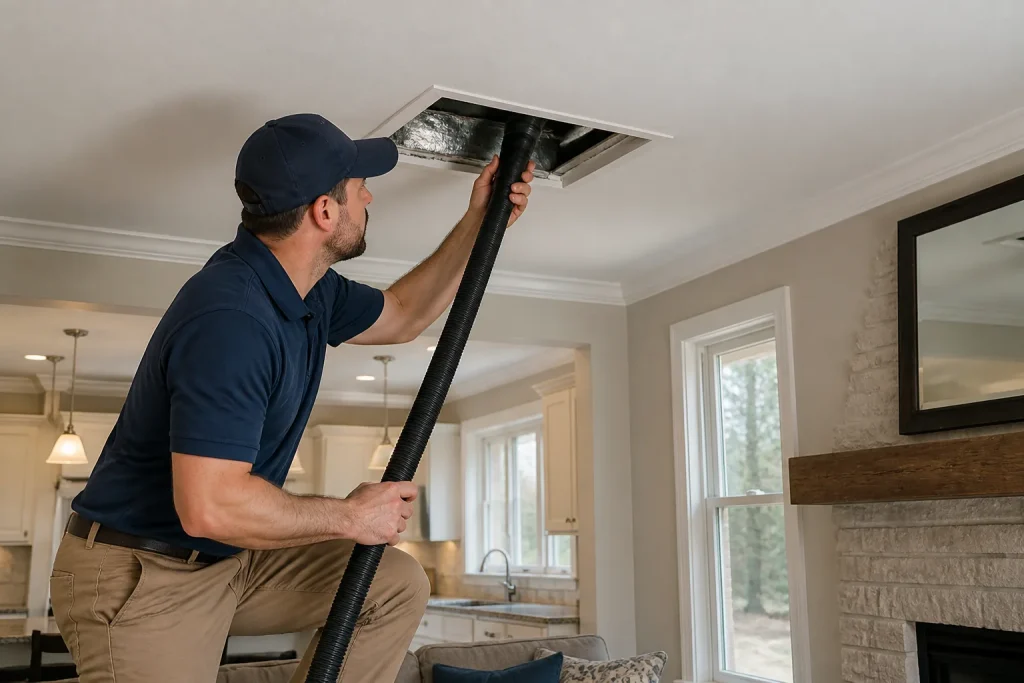
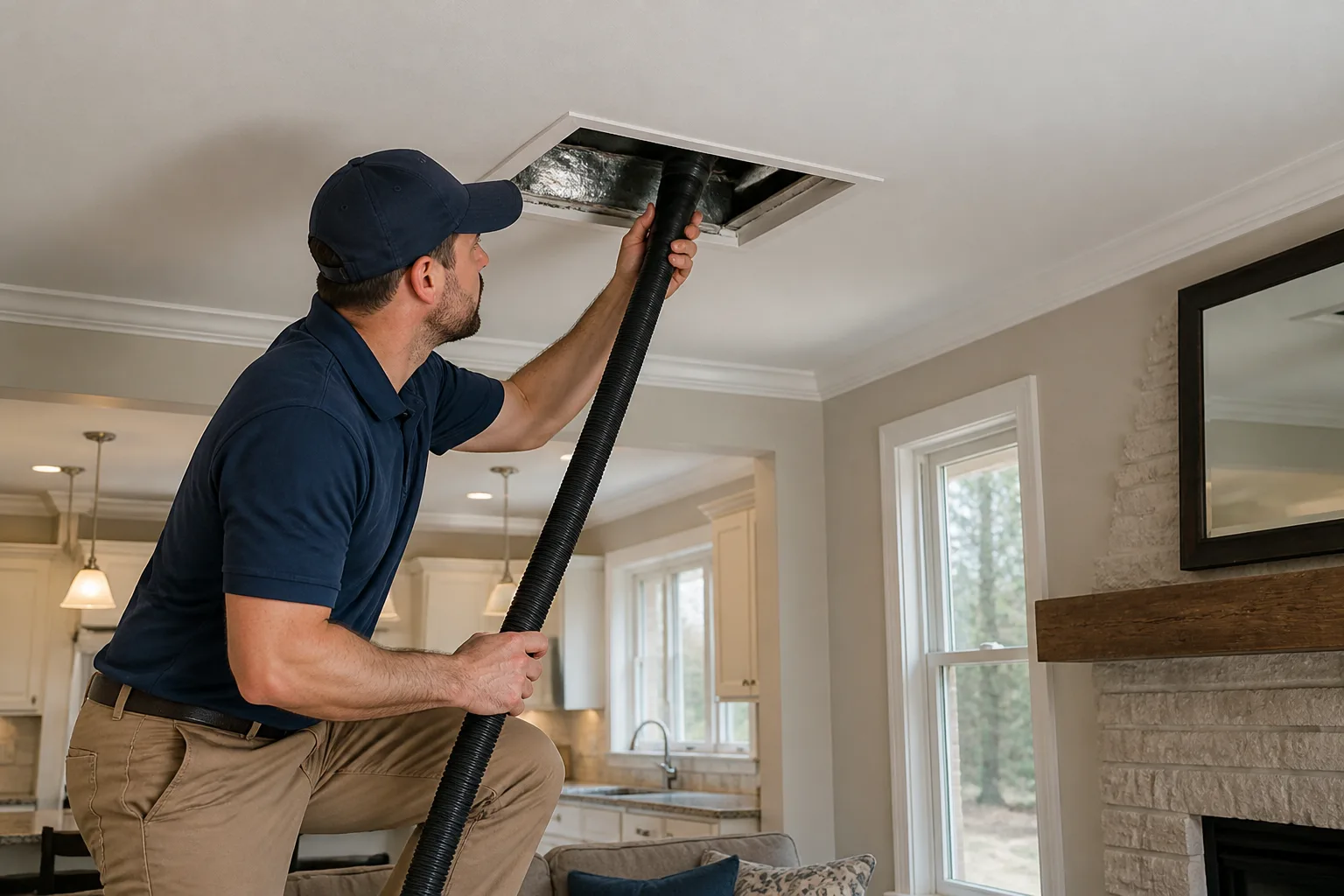
A camera inspection is the starting point for any repair-or-replace decision in Charleston. It shows what a shop-vac can’t: the condition of the duct walls, the state of every joint, and whether the ductwork is even doing its job of moving air. We run the camera under negative pressure with a Rotobrush system so the view stays clear, not clouded with loose debris. Without that inspection, every recommendation is a guess.
Here’s what we look for, and what each finding means:
- Collapsed or crushed flex duct. Common in Charleston attics where flex runs get stepped on or kinked around corners. Cleaning does nothing here. The run needs to be replaced.
- Disconnected joints. Flex duct can separate from collars or boots. Cleaning a disconnected duct is wasted effort – you’re blowing air into the attic. The joint needs reconnecting and sealing.
- Rusted or deteriorated sheet metal. Rust in sheet metal can signal moisture intrusion. Small spots may be sealed and treated. Widespread rust usually means replacement.
- Fiberglass duct board with compromised interior. Once fiberglass liner breaks down or holds moisture, cleaning can make it worse by disturbing the fibers. Replacement is often the right call.
- Mold that has penetrated the duct wall material. Surface mold can be sanitized. Mold growing into fiberglass or porous duct board means the material itself is compromised and often should be removed.
Every finding points to a different decision. That’s why the camera comes first in Charleston, not the cleaning quote.
When is cleaning the right call, and when is it a waste of money?
Cleaning is the right call when the ducts are structurally sound and the problem is buildup, not damage. If the camera shows intact sheet metal or flex with visible dust, debris, or a light surface film, cleaning restores airflow and removes what’s feeding odors and allergies. Add a seal and a sanitize step and you’ve solved the problem.
Cleaning is a waste of money when the camera shows any of the following:
- Flex duct collapsed or torn
- Joints disconnected or boots pulled loose
- Duct board with moisture damage or degraded liner
- Mold that has grown into the duct material
- Sheet metal with rust through the wall
If you clean damaged ducts, you remove debris and then blow new conditioned air straight into the same broken seams. The bill goes up and the air quality doesn’t improve. In Charleston, where attics get hot and humid and duct runs can be long, we see compromised flex runs more often than homeowners expect.
One more thing: if you’ve never had the system inspected, don’t assume age is the deciding factor. A twenty-year-old sheet metal trunk can be in better shape than a ten-year-old flex run that was installed wrong.
What is duct sealing, and where does it fit in the decision?
Duct sealing is the middle option most homeowners never hear about. If the inspection shows sound duct material but leaky joints, you don’t need to clean and you don’t need to replace. You need to seal. Sealing closes the gaps so the air you’re paying to condition actually reaches the rooms.
There are two sealing approaches worth knowing:
- Mastic sealing. A brush-applied sealant worked into accessible joints, collars, and seams by hand. Effective wherever a technician can reach the ductwork. Typically the lower-cost option.
- Aerosol sealing. A sealed-in-place process where a fog of sealant particles is pushed through the duct system under pressure. The particles collect at leaks and build up until the gaps close. Useful for joints hidden behind drywall or in hard-to-reach runs. Higher cost, but it reaches places mastic can’t.
Aerosol sealing isn’t right for every duct system – notably not for damaged flex or fiberglass that’s already failing – but for an intact system with hidden leaks, it’s a real middle path. For Charleston homeowners facing a replace-or-clean decision, sealing is often the answer that neither of those covers.
We offer duct repair and sealing as part of our full service scope, so you won’t need a second contractor to finish the diagnosis.
Age and material: when does replacement actually make sense?
There’s no single age cutoff for duct replacement. Material matters more than years, but age gives you a starting point. Here’s the rough framework we use:
- Flex duct: Typically has the shortest service life of the three common materials. Prone to kinking, crushing, and joint separation. If a flex run is past roughly 15 years and showing any damage, replacement is usually the cleaner call.
- Fiberglass duct board: Can hold up longer than flex when installed well, but once the interior liner breaks down or moisture gets in, it can’t be cleaned back to health. Past about 20 years, expect to face replacement or targeted replacement of the worst runs.
- Sheet metal: The most durable of the three. A well-installed sheet metal system can last decades with proper sealing. Age alone rarely justifies replacement here – condition of the seams and any rust is what decides it.
Replacement makes economic sense when the cost of cleaning, sealing, and repairing damaged sections approaches the cost of replacing them outright, or when a camera shows so much damage that no amount of cleaning will restore performance. Short of that, targeted repair and sealing usually beats wholesale replacement.
How do you read a duct blaster or blower door test result?
These tests measure how leaky your ductwork is, and the number tells you where you sit. A duct blaster test measures duct leakage directly. A blower door test measures whole-house air leakage; if the technician also tests with the ducts sealed off, the difference tells you how much of the leak is in the ducts themselves. Either test can help you decide whether cleaning is worth paying for before you seal.
What the leakage number means in practice:
- A leaky system loses conditioned air before it reaches the rooms. Cleaning that system and leaving it leaky means the newly cleaned air still leaves through the same gaps.
- A tight system means cleaning is likely to produce a measurable result, because the air you clean can actually stay in the ducts.
Standard residential duct leakage benchmarks aren’t a single universal number; they depend on the home size, system, and whether the figure is total leakage or leakage to the outdoors. What matters is the direction of the number before and after sealing, not the label on the report. Ask your technician to explain which measurement they took and what changed after the work.
What does a full lifecycle approach look like, and why does the order matter?
The sequence matters more than any single step. Here’s how we approach a full lifecycle job in Charleston:
- Inspect first. Camera the system under negative pressure so the view is clear. This is where the repair-or-replace decision is made, before any money is spent on cleaning.
- Clean with professional equipment. Rotobrush and Nikro systems reach into every branch and pull the debris out under controlled airflow. Abatement Technologies containment keeps the dust from settling back into your rooms.
- Re-inspect after cleaning. Under negative pressure, damage that was hidden under debris becomes visible. This is where sealing or repair decisions get finalized.
- Seal compromised sections. Mastic or aerosol sealing, depending on accessibility and duct material.
- Sanitize where needed. Guardsman-grade treatment applied to surfaces where microbial contamination is a concern, after the system is clean and sealed. Sanitizing a dirty duct is wasted – it can’t reach what the debris is covering.
Sanitizing before cleaning, or sealing before inspecting, means you’re working on the wrong surface. The full lifecycle order – clean, inspect, seal, sanitize – is what makes the diagnosis reliable.
When to call a pro: any time a camera inspection shows disconnected joints, collapsed flex, rust through sheet metal, or mold in the duct material. These are not jobs for a shop vac and a Saturday afternoon. Call (877) 792-6016 and we’ll walk you through what you’re looking at.
Related services in Charleston: air duct cleaning for the clean-first step, HVAC cleaning for the equipment side, and dryer vent cleaning if your fire-prevention check is overdue. For the bigger picture, our Charleston Air Duct Cleaning Pros team handles all five services under one roof.
The Bottom Line
Repair vs. replace isn’t decided by the age of your ducts. It’s decided by what a camera inspection shows about duct integrity. If the ducts are sound and the problem is buildup, clean them. If they’re damaged but salvageable, seal and repair. If the material itself is failing, replace the failed runs. Skip the inspection and you’re guessing – and often paying for a cleaning that doesn’t fix anything.
At Charleston Air Duct Cleaning Pros, our technicians have up to 14 years of experience and we run the full sequence – commercial-grade Rotobrush and Abatement Technologies equipment, Honeywell and Aprilaire products where air quality matters, and Guardsman-grade sanitizing when the situation calls for it. One flat price per system, agreed before work starts. Before-and-after photos of your own ducts, so you know what you paid for. If you’re in Charleston and want an honest look at your ductwork, we offer free estimates – call (877) 792-6016.
Frequently Asked Questions
Typical air duct cleaning in Charleston runs on a per-system basis, not per vent, with the final price set by a written estimate after we inspect the system. Whole-system cleaning costs vary with the number of runs and the condition we find. Call (877) 792-6016 for an exact quote – estimates are free.
Cheap quotes usually skip the camera inspection and clean only what’s reachable – often just the main trunk, not every branch. A low number tells you nothing about whether the ducts are even in condition to be cleaned. The relevant comparison is what the quote covers, not the headline number. Call (877) 792-6016 to walk through what a real scope includes.
Before-and-after photos of your own ducts, and a camera inspection you can see first-hand. If a company won’t show you the before-and-after, that’s your answer. We show both. Call (877) 792-6016 to book an inspection and estimate.
There’s no universal schedule – it depends on the system, the home, and what the camera shows. Some Charleston homes go years without needing it; others with pets, recent renovations, or visible buildup need it sooner. Inspect first, then decide. Call (877) 792-6016 and we’ll tell you honestly what we see.
Many damaged ducts can be repaired and sealed – disconnected joints, small holes, and accessible leaks are all fixable. Replacement is for ducts where the material itself has failed: collapsed flex, mold grown into fiberglass, rust through sheet metal. The camera tells you which one you’re looking at. Call (877) 792-6016 for a free inspection and quote.
Cleaning removes dust and debris from the duct surfaces. Sanitizing applies a treatment to the surfaces after cleaning, for cases where microbial growth is a concern. Sanitizing before cleaning is wasted work – it can’t reach what the debris is covering. We use Guardsman-grade treatments where they’re warranted.
Written by the team at Charleston Air Duct Cleaning Pros.
Need Air Duct Cleaning Help?
Call Charleston Air Duct Cleaning Pros - the local pro we connect you with is licensed and insured, here with fast help in Charleston.
(877) 792-6016